Private Jets Las Vegas
Private jets Las Vegas travelers book most often from Los Angeles, Phoenix, and San Diego. A light jet from LA runs $4,000 to $6,000 for the 47-minute flight. This guide covers costs and airports.
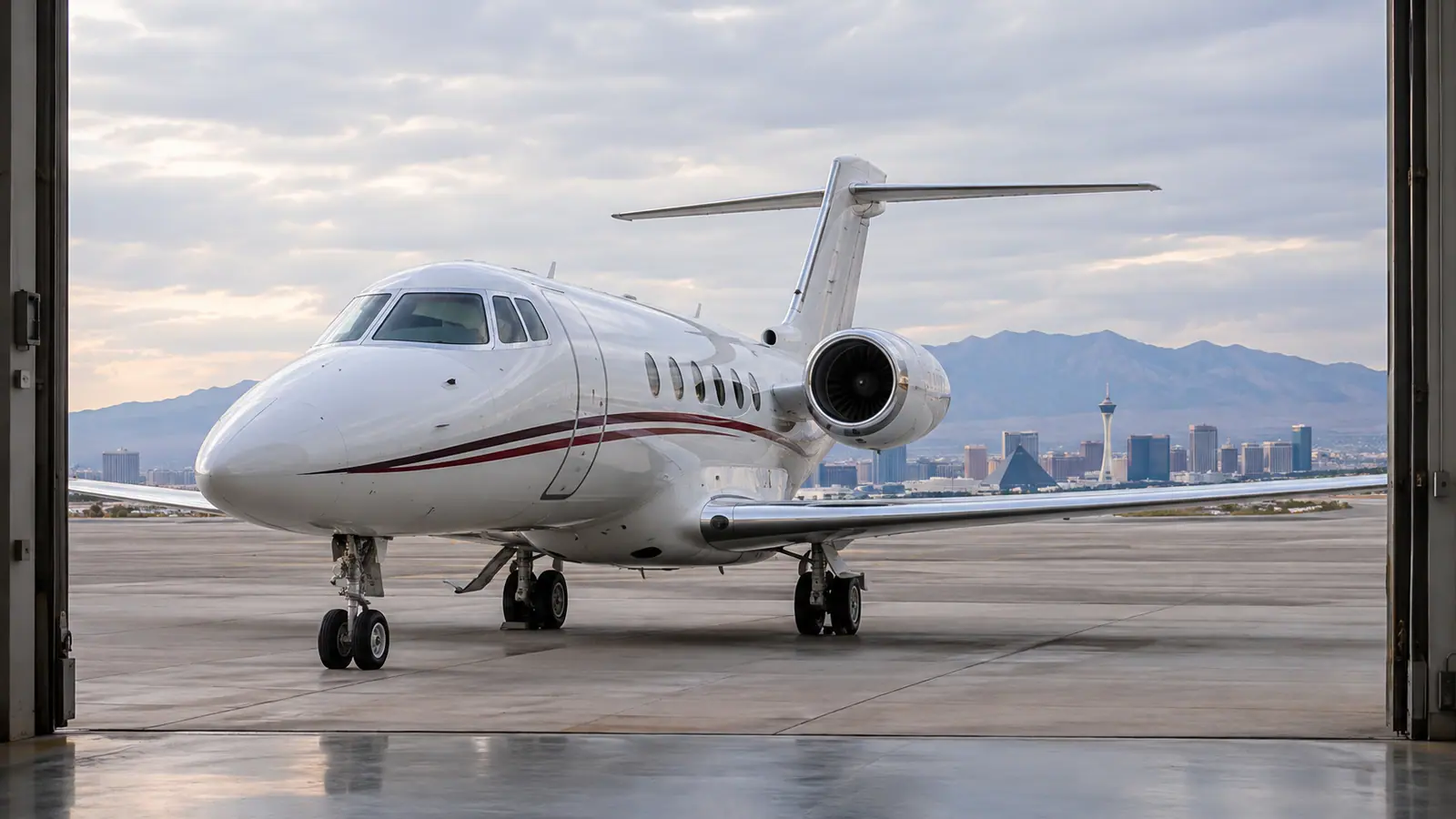
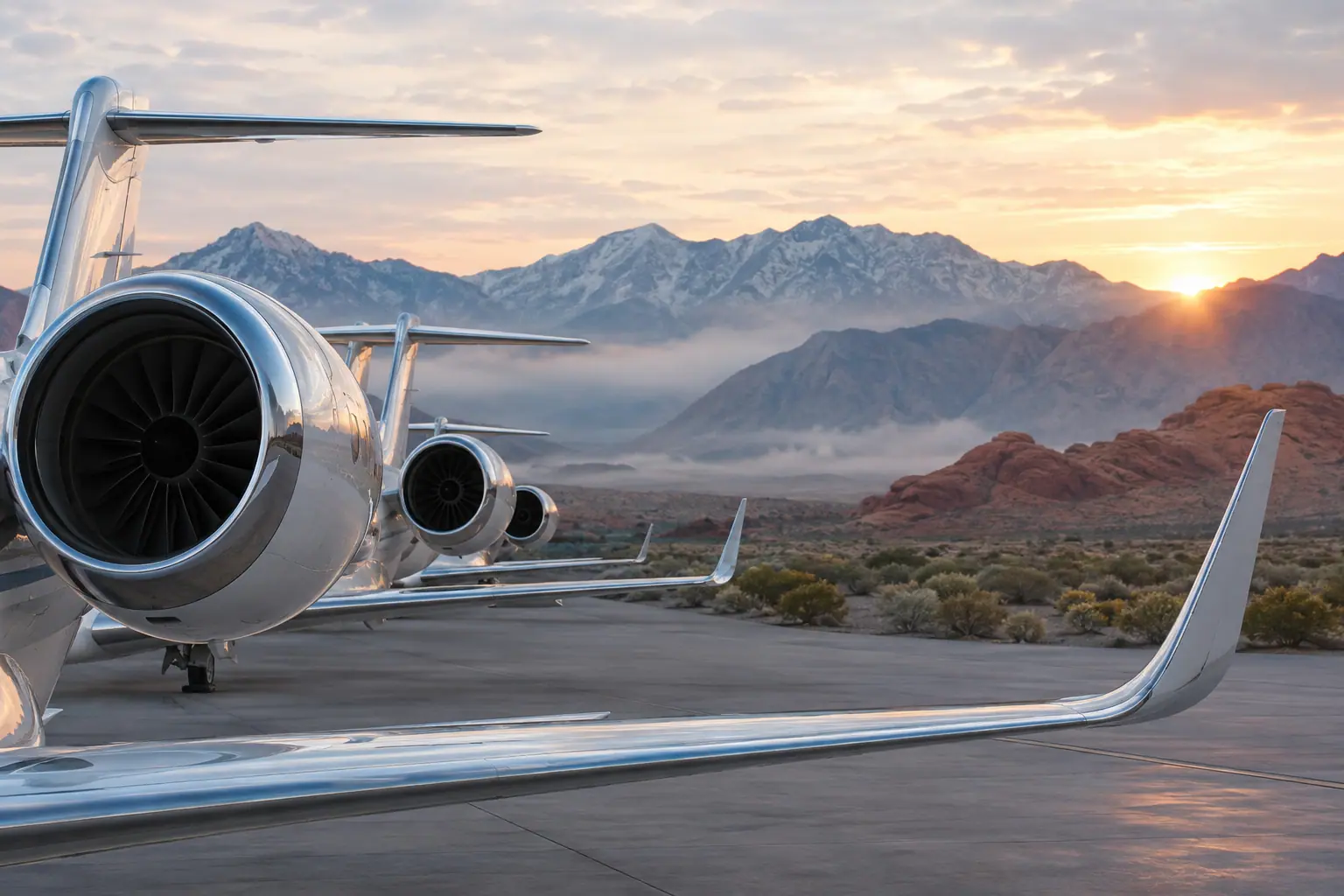
Aircraft classes you can book
Light jets carry 4 to 7 passengers and cruise at about 430 knots, which suits the 199-mile hop from Los Angeles or the 209-mile run from Phoenix. Super-midsize jets cruise at 470 knots with 8 to 10 seats and a typical range of 3,200 nautical miles, enough for a nonstop Las Vegas to New York leg. Heavy jets add cabin height and baggage space for 10 to 14 passengers. The right aircraft depends on your passenger count and the longest leg of your trip, not on which model looks best in a photo.
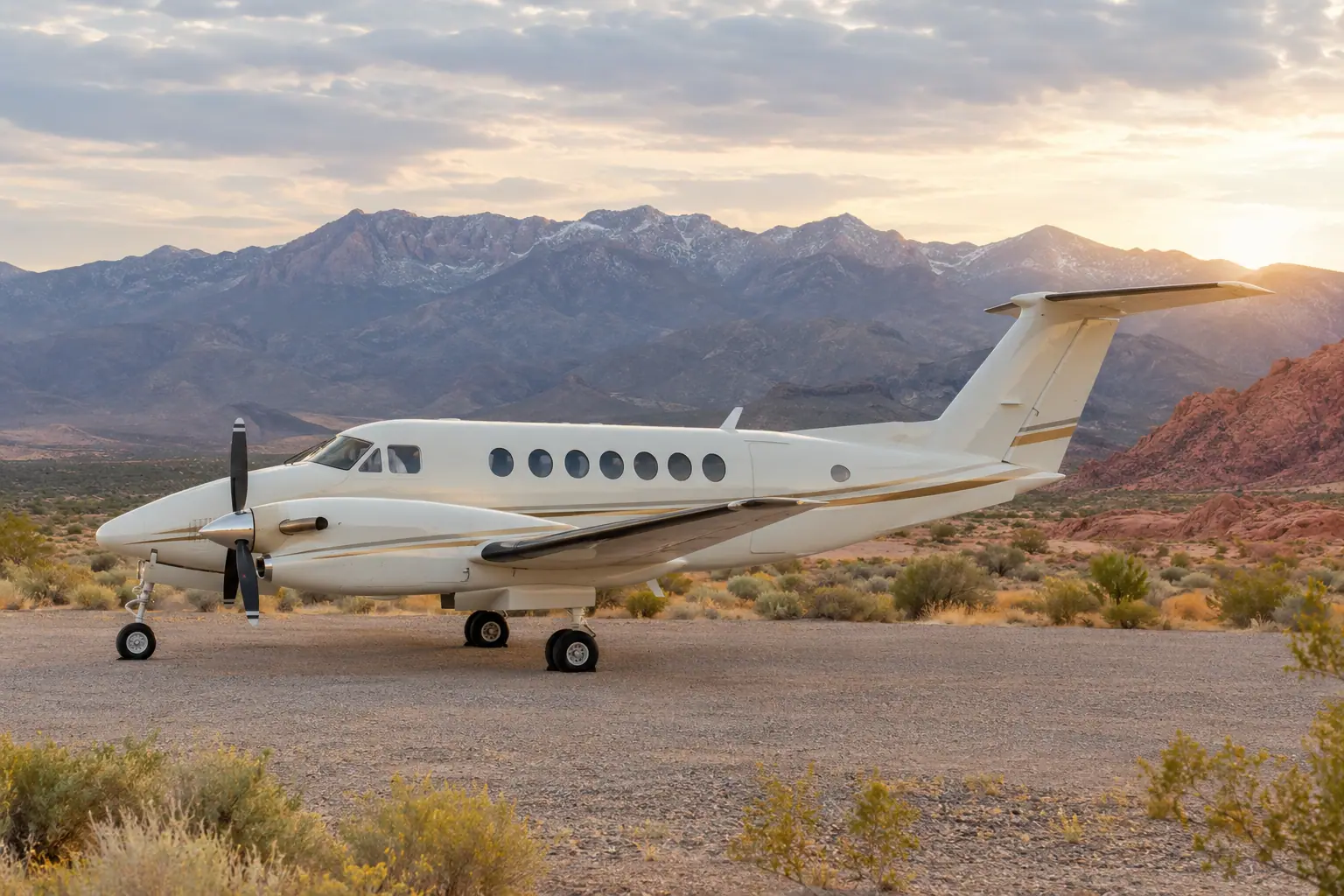
Turboprop
- 6-8 seats
- 300 kt cruise
- 1,500 nm range
Pilatus PC-12 NGX, Daher TBM 960
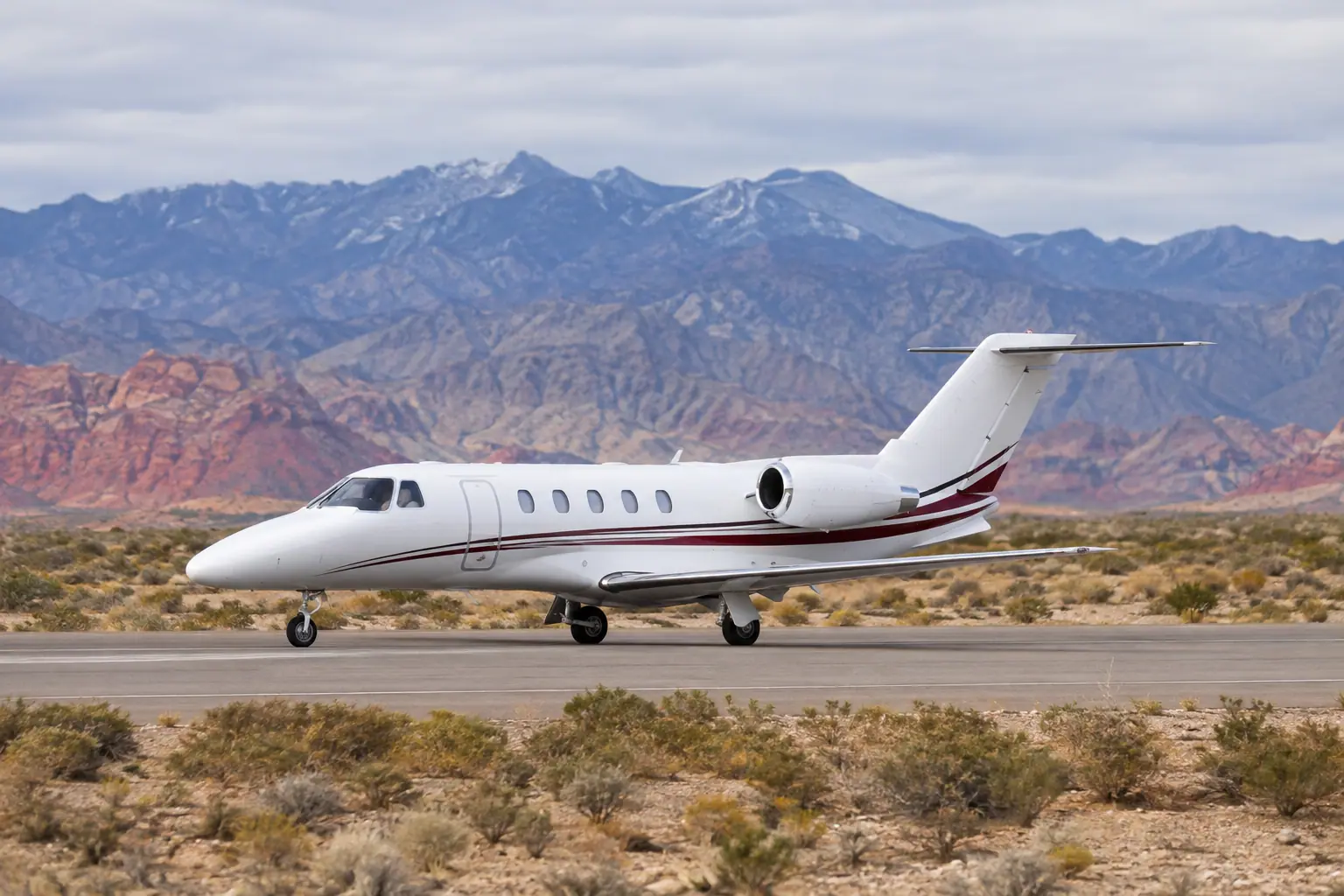
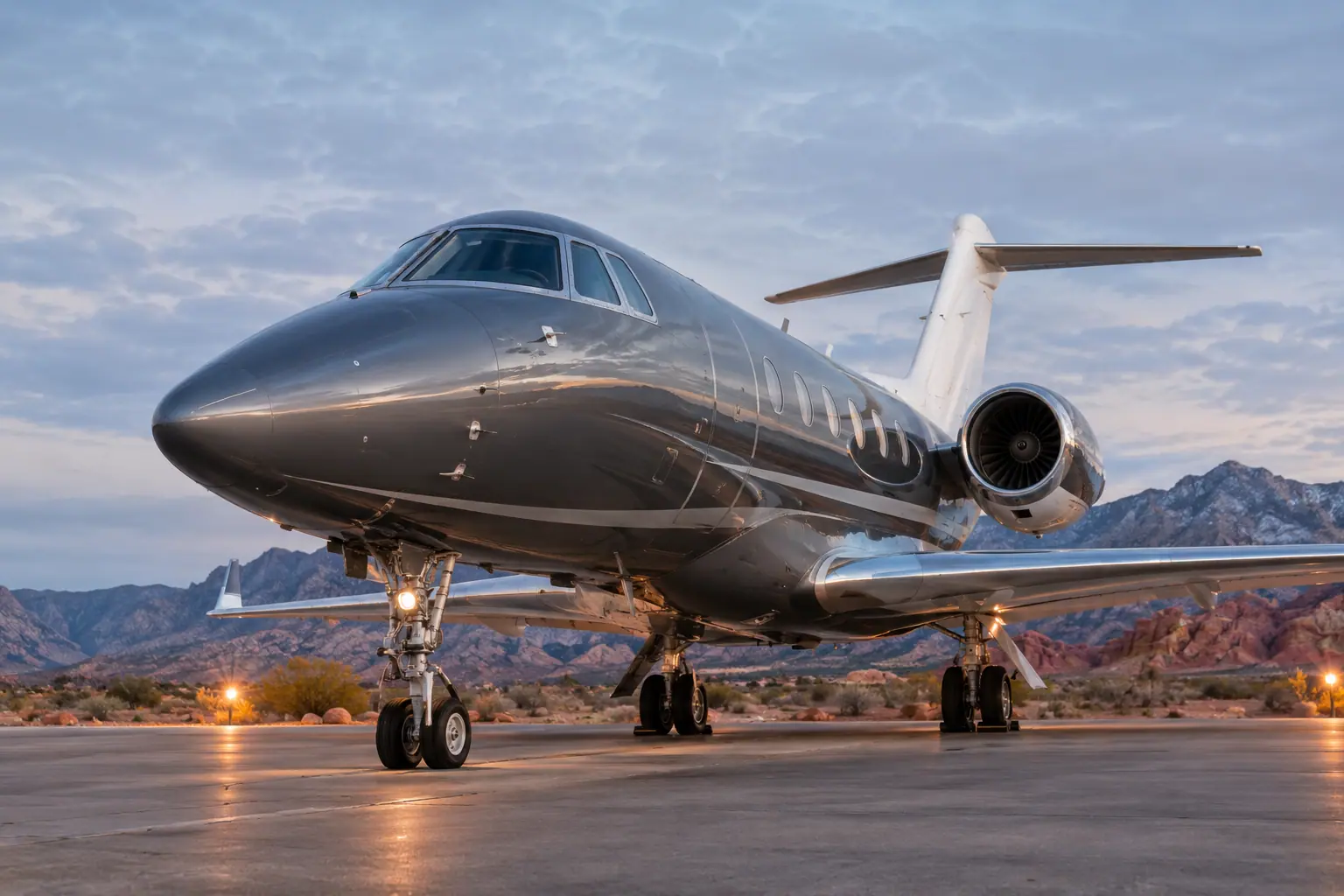
Light jet
- 4-7 seats
- 430 kt cruise
- 1,400 nm range
Cessna Citation CJ4 Gen2, Embraer Phenom 300E
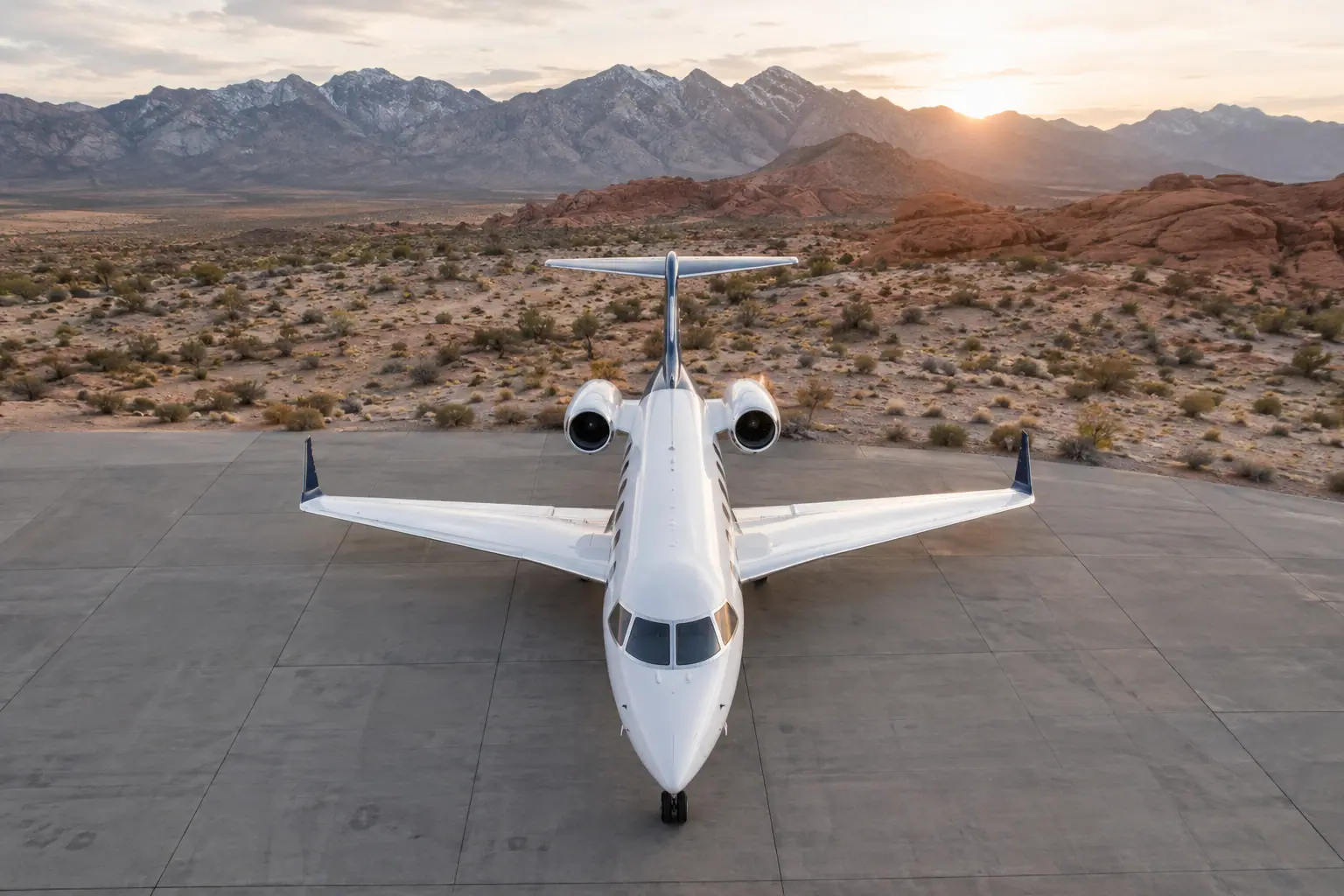
Midsize jet
- 7-9 seats
- 440 kt cruise
- 2,100 nm range
Cessna Citation XLS+, Cessna Citation Latitude
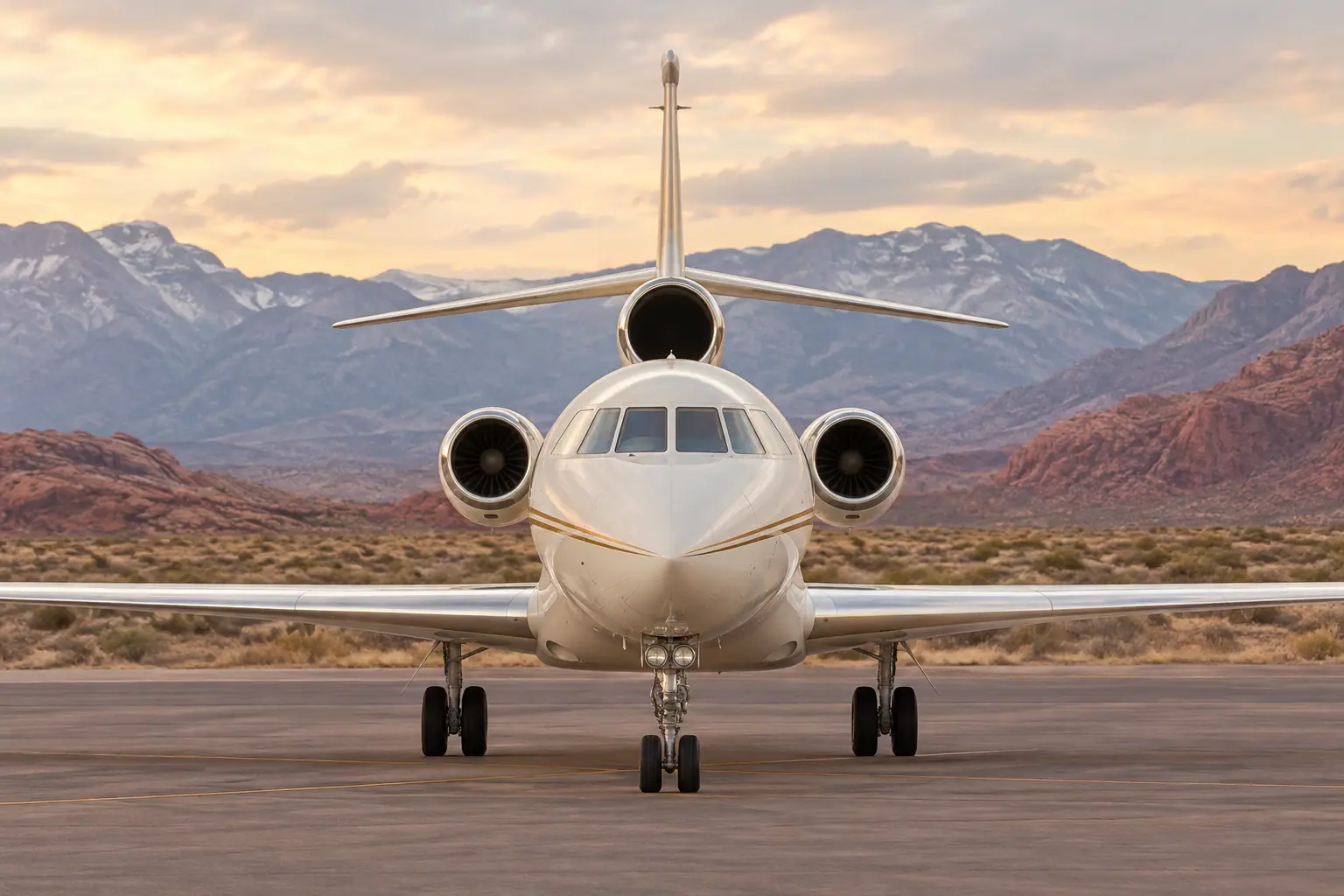
Super-midsize jet
- 8-10 seats
- 470 kt cruise
- 3,200 nm range
Cessna Citation X+, Bombardier Challenger 350
Heavy jet
- 10-14 seats
- 470 kt cruise
- 4,000 nm range
Dassault Falcon 900LX, Gulfstream G450

When to book Las Vegas jet flights
Demand peaks around major conventions, holiday weekends, and winter events, when hotel occupancy and ramp space tighten at all three airports. The mild winter months of December through February, with highs of 56F to 63F, are comfortable for flying but popular for events, so book several weeks ahead. If your trip overlaps a citywide convention, then lock in the aircraft and FBO early rather than waiting for a better rate. Spring and fall offer the widest aircraft selection and the least heat-related performance penalty.
What private jets in Las Vegas cost
Private jets Las Vegas pricing follows aircraft size and distance more than any single airport fee. A light jet charter from Los Angeles to Las Vegas typically runs $4,000 to $6,000 for the 199-nautical-mile trip, and hourly rates range from $3,800 to $5,800. Turboprops start at $2,200 to $3,500 per hour for 6 to 8 passengers. Midsize jets run $5,200 to $7,800 per hour and carry 7 to 9. These are estimates; operators confirm final quotes after checking aircraft availability and crew duty time.
Nonstop flights from Dallas to Las Vegas on a light jet cost about $9,500 to $15,000 for the 925 nautical miles. From New York, a light jet quote runs $22,000 to $33,500 because the 1,935-nautical-mile leg pushes range limits and often requires a fuel stop or a larger aircraft. For a heavy jet that seats 10 to 14, plan on $9,500 to $14,500 per hour whether you fly to Cabo San Lucas or stay within Nevada. If your group is small and the trip is short, then a turboprop can cut the bill without adding much time.
| Type | Seats | Hourly estimate | Los Angeles → Las Vegas |
|---|---|---|---|
| Turboprop | 6-8 | $2,200–$3,500 | $2,000–$3,500 |
| Light jet | 4-7 | $3,800–$5,800 | $4,000–$6,000 |
| Midsize jet | 7-9 | $5,200–$7,800 | $5,000–$8,000 |
| Super-midsize jet | 8-10 | $7,200–$10,000 | $7,000–$10,000 |
| Heavy jet | 10-14 | $9,500–$14,500 | $9,500–$14,500 |
How heat and weather affect flights
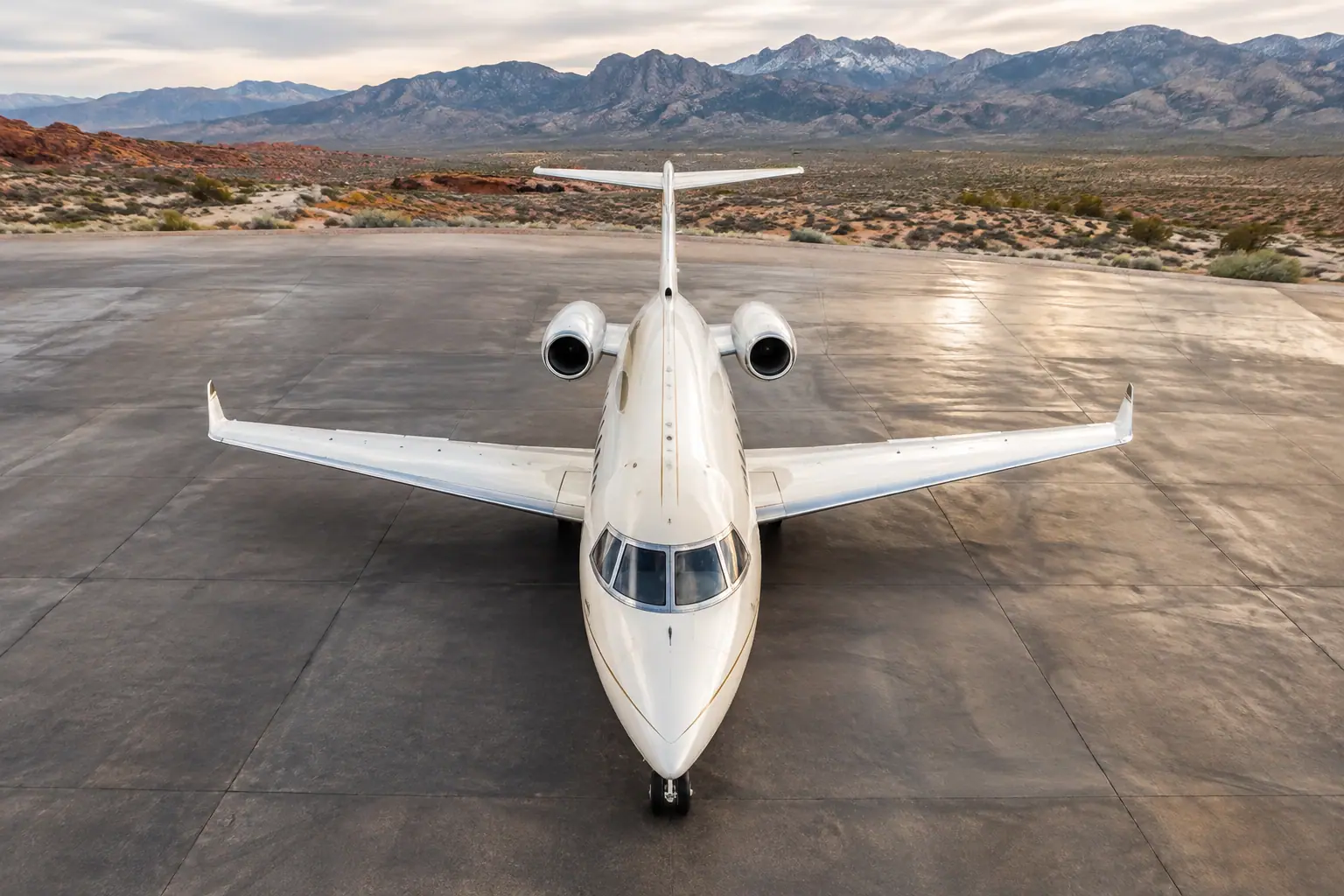
Summer heat is the main operational factor for private jets Las Vegas travelers book in July and August. The monthly high reaches 104F in July and 102F in August, and density altitude at Harry Reid averages about 5,700 feet in July, climbing toward 6,200 feet at 115F. High density altitude reduces engine and wing performance, so a light jet that flies fine in January may face a weight restriction in July. If your departure falls on a hot afternoon, then the operator may shift the flight to early morning or move it to a longer runway.
Rain is not the issue here. Wet days run 1 to 3 per month all year, so thunderstorms are occasional rather than seasonal. The bigger pattern is event demand: convention weeks and major fights push ramp space and crew availability. When a large event lands on the same weekend as your trip, then book earlier and expect less flexibility on departure times.
Winter brings mild highs of 56F to 63F from December through February and drops density altitude to about 2,500 to 3,000 feet, which is easier on aircraft performance. If you fly in winter, then the main planning risk shifts from heat to holiday demand and to weather at your origin city, not Las Vegas itself.
| Month | Avg high | Wet days | KLAS DA | KHND DA | KVGT DA |
|---|---|---|---|---|---|
| Jan | 58°F | 3 | 2,600 ft | 3,000 ft | 2,700 ft |
| Feb | 63°F | 3 | 3,000 ft | 3,400 ft | 3,000 ft |
| Mar | 71°F | 3 | 3,500 ft | 3,900 ft | 3,500 ft |
| Apr | 78°F | 2 | 4,000 ft | 4,400 ft | 4,000 ft |
| May | 89°F | 1 | 4,700 ft | 5,100 ft | 4,700 ft |
| Jun | 99°F | 1 | 5,400 ft | 5,800 ft | 5,400 ft |
| Jul | 104°F | 2 | 5,700 ft | 6,100 ft | 5,700 ft |
| Aug | 102°F | 2 | 5,600 ft | 6,000 ft | 5,600 ft |
| Sep | 94°F | 2 | 5,000 ft | 5,400 ft | 5,100 ft |
| Oct | 80°F | 2 | 4,100 ft | 4,500 ft | 4,100 ft |
| Nov | 66°F | 2 | 3,200 ft | 3,600 ft | 3,200 ft |
| Dec | 56°F | 3 | 2,500 ft | 2,900 ft | 2,500 ft |
Rain days count 1 mm or more. Density altitude uses the average afternoon high and a rule-of-thumb formula. Operators apply their own performance figures.
Common Las Vegas jet routes
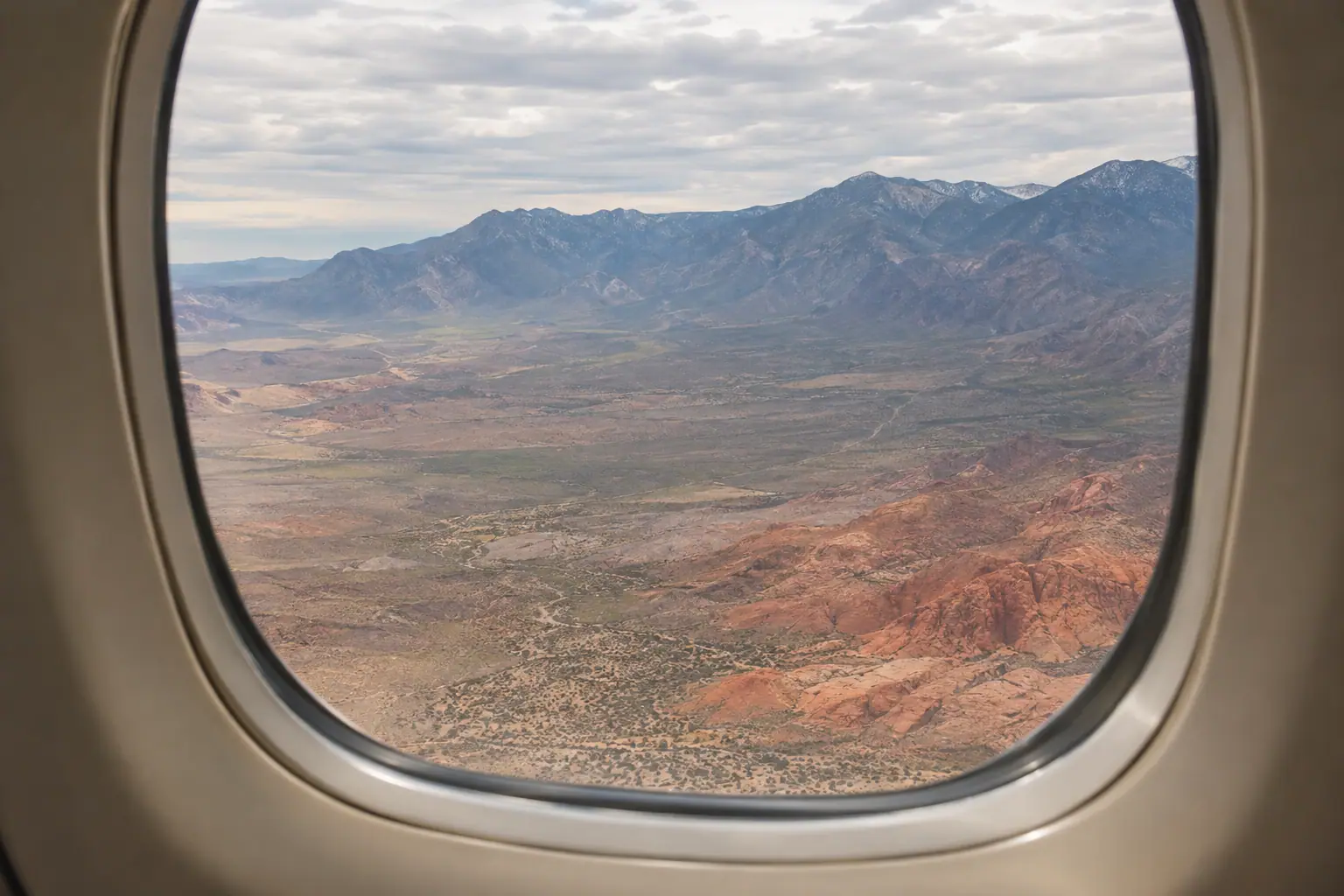
The busiest short routes into Las Vegas are Los Angeles, Orange County, San Diego, and Phoenix, all under 210 nautical miles and about 47 to 49 minutes in a light jet. San Francisco and San Jose sit near 335 to 359 nautical miles, roughly 1 hour 7 minutes to 1 hour 11 minutes. For a longer trip, Las Vegas to Aspen covers 436 nautical miles in about 1 hour 22 minutes and quotes around $5,000 to $8,000 in a light jet.
A flight from Las Vegas to Cabo San Lucas covers 826 nautical miles in about 2 hours 19 minutes for $9,000 to $13,500 in a light jet, but it is an international leg. When you cross into Mexico, then CBP and Mexican customs formalities apply, so build extra time into the schedule. Chicago to Las Vegas is 1,318 nautical miles and takes about 4 hours 16 minutes in a light jet at $16,000 to $25,000. The New York and Miami legs both exceed 1,880 nautical miles and usually call for a super-midsize or heavy jet.
- Los Angeles → Las Vegas0h 47m
- Orange County → Las Vegas0h 47m
- San Diego → Las Vegas0h 48m
- Phoenix → Las Vegas0h 49m
- Scottsdale → Las Vegas0h 50m
- San Francisco → Las Vegas1h 11m
- San Jose → Las Vegas1h 07m
- Sacramento → Las Vegas1h 09m
- Seattle → Las Vegas2h 09m
- Denver → Las Vegas1h 36m
- Salt Lake City → Las Vegas1h 05m
- Dallas → Las Vegas2h 34m
- Houston → Las Vegas2h 55m
- Austin → Las Vegas2h 37m
- Chicago → Las Vegas4h 16m
- New York → Las Vegas5h 46m
- Atlanta → Las Vegas4h 45m
- Miami → Las Vegas5h 39m
- Las Vegas → Los Angeles0h 47m
- Las Vegas → Orange County0h 47m
- Las Vegas → Phoenix0h 49m
- Las Vegas → Aspen1h 22m
- Las Vegas → Cabo San Lucas2h 19m
- Las Vegas → New York5h 46m
Las Vegas airports for private jets
Harry Reid International Airport
- KLAS code
- 14,835 ft runway
- 2 mi to the Strip
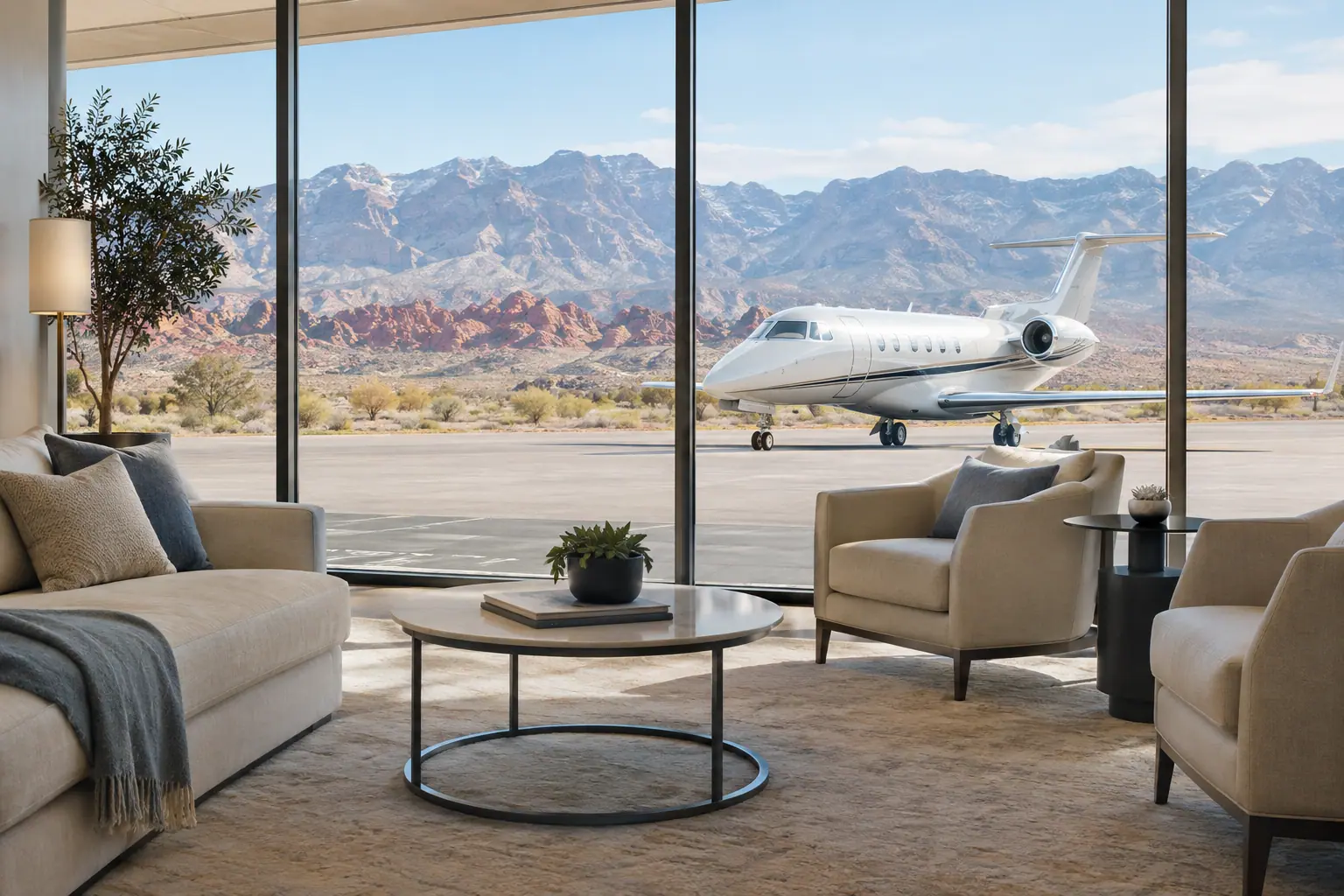
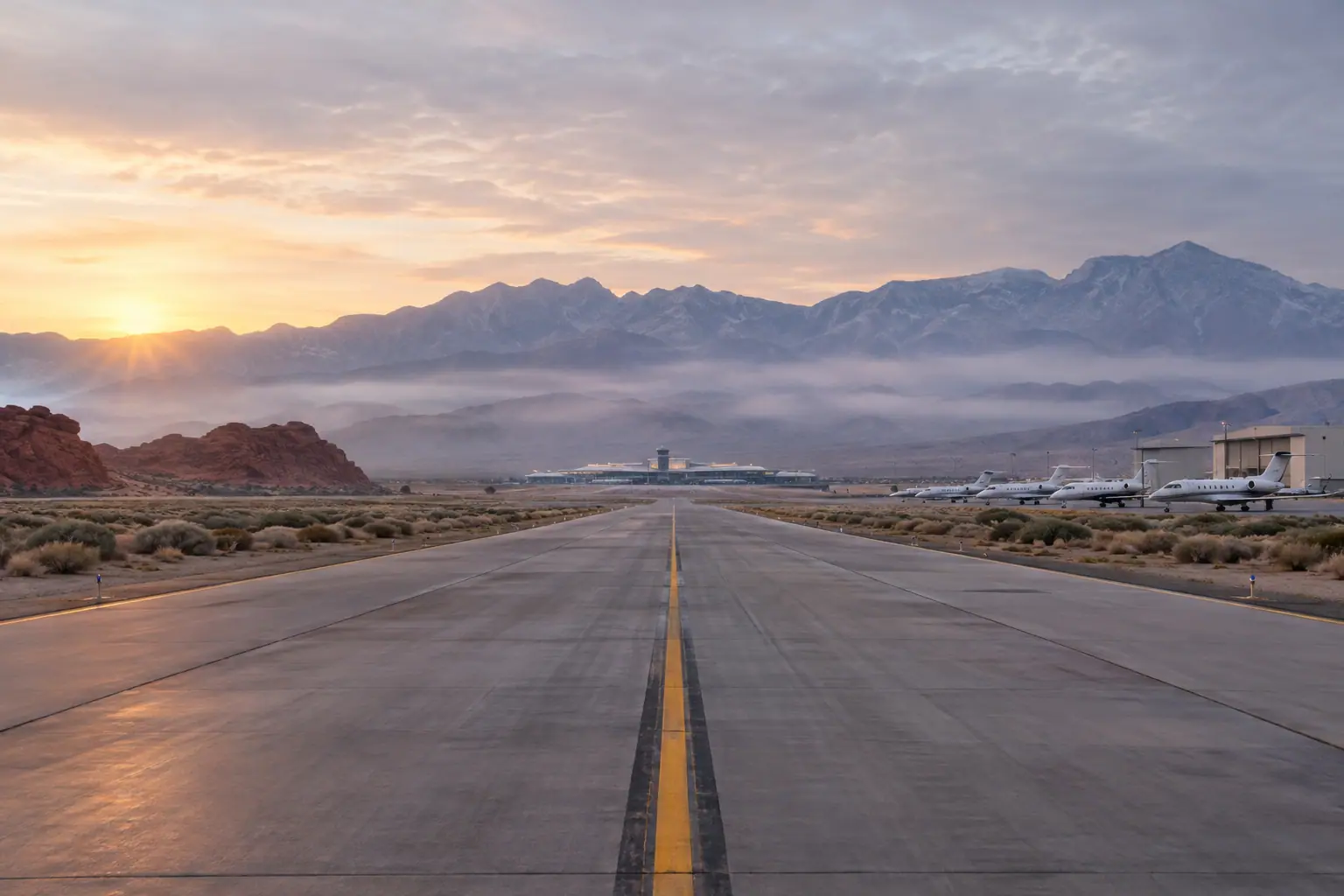
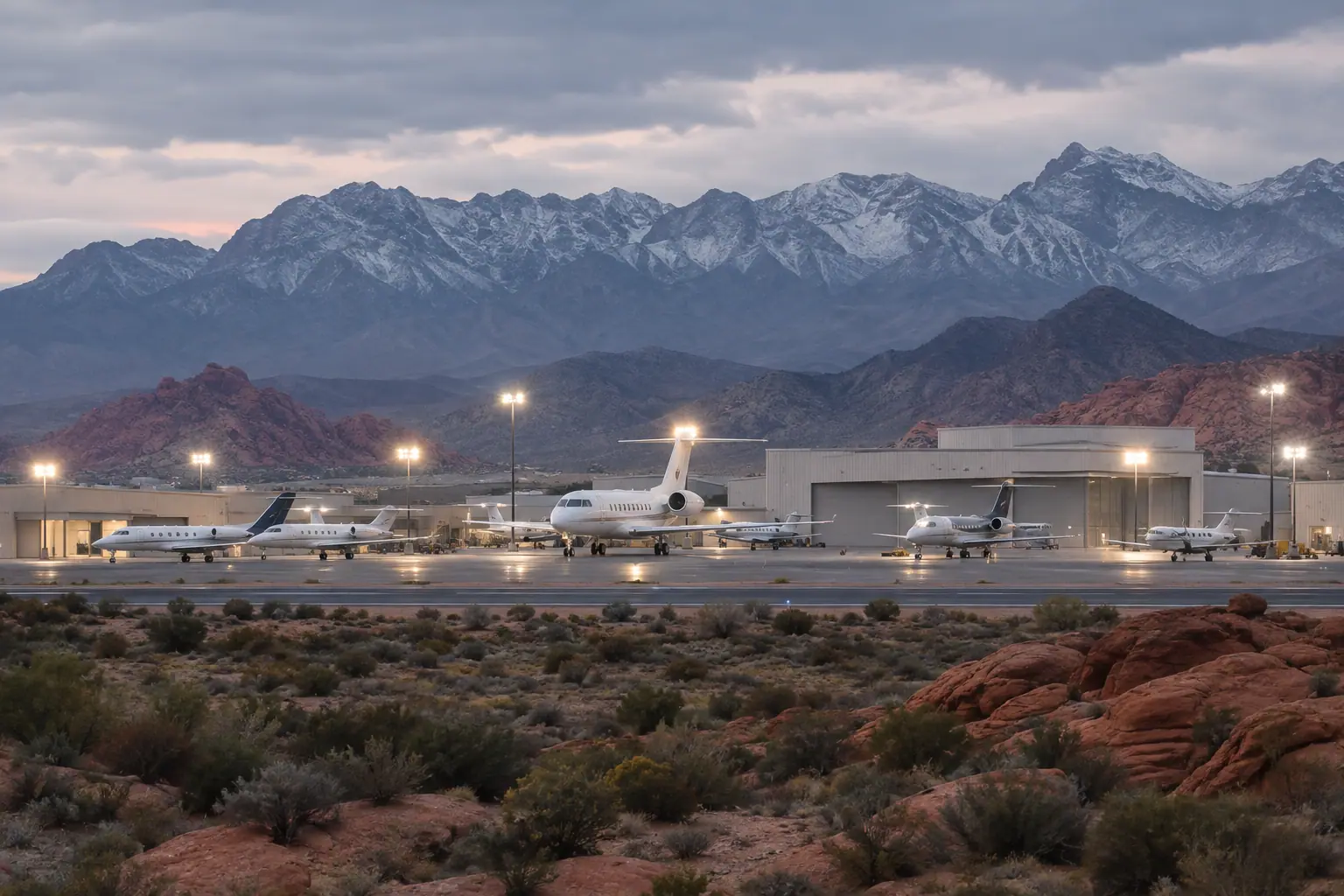
Harry Reid International Airport sits 2 miles from the Strip and has a 14,835-foot runway, the longest among the three. Its elevation is 2,181 feet, and July density altitude reaches about 5,700 feet with a peak near 6,200 feet at 115F. Atlantic Aviation and Signature Aviation handle general aviation there. The close-in location is the draw, but slot and traffic constraints can add taxi time on busy weekends. If your schedule is tight, then confirm the FBO and ramp space before you book.
Henderson Executive Airport
- KHND code
- 6,501 ft runway
- 10 mi to the Strip
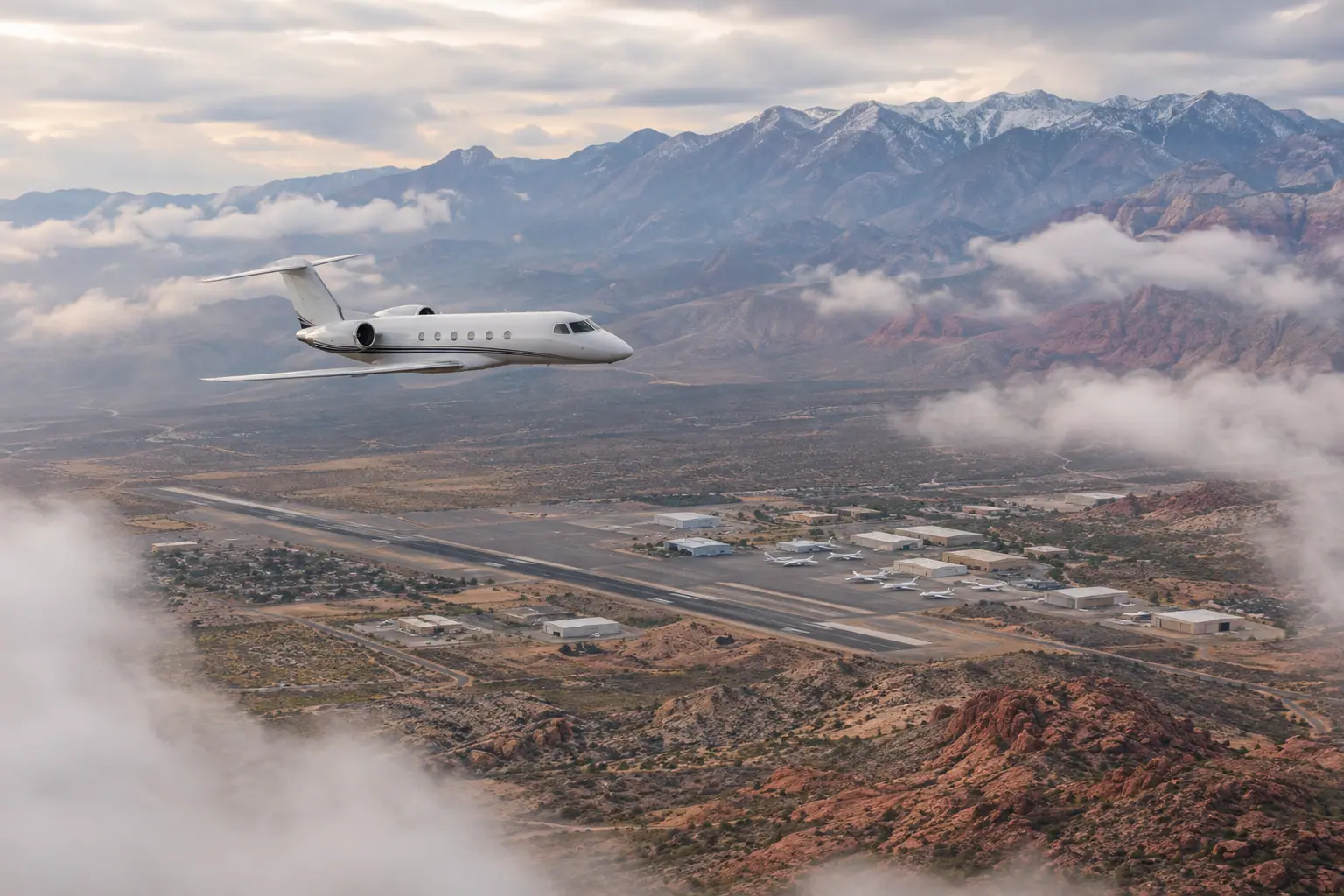
Henderson Executive Airport is about 10 miles from the Strip at 2,492 feet elevation with a 6,501-foot runway. Summer density altitude at Henderson climbs to about 6,100 feet in July and 6,600 feet at peak heat, the highest of the three fields, which can limit performance on light jets and turboprops. The trade-off is easier surface movement and less airline traffic than Harry Reid. When your aircraft is small and the day is hot, then ask the operator to run a performance calculation before confirming.
North Las Vegas Airport
- KVGT code
- 5,005 ft runway
- 7 mi to the Strip
North Las Vegas Airport is 7 miles from the Strip at 2,205 feet elevation with a 5,005-foot runway. July density altitude there averages about 5,700 feet and peaks near 6,300 feet at 115F, so runway length and temperature matter for smaller aircraft. It handles general aviation without the airline congestion of Harry Reid and often works well for turboprops and light jets. If your trip is a short hop from California or Arizona, then North Las Vegas is worth comparing against the other two.
How to book a private jet in Las Vegas
Send your trip details
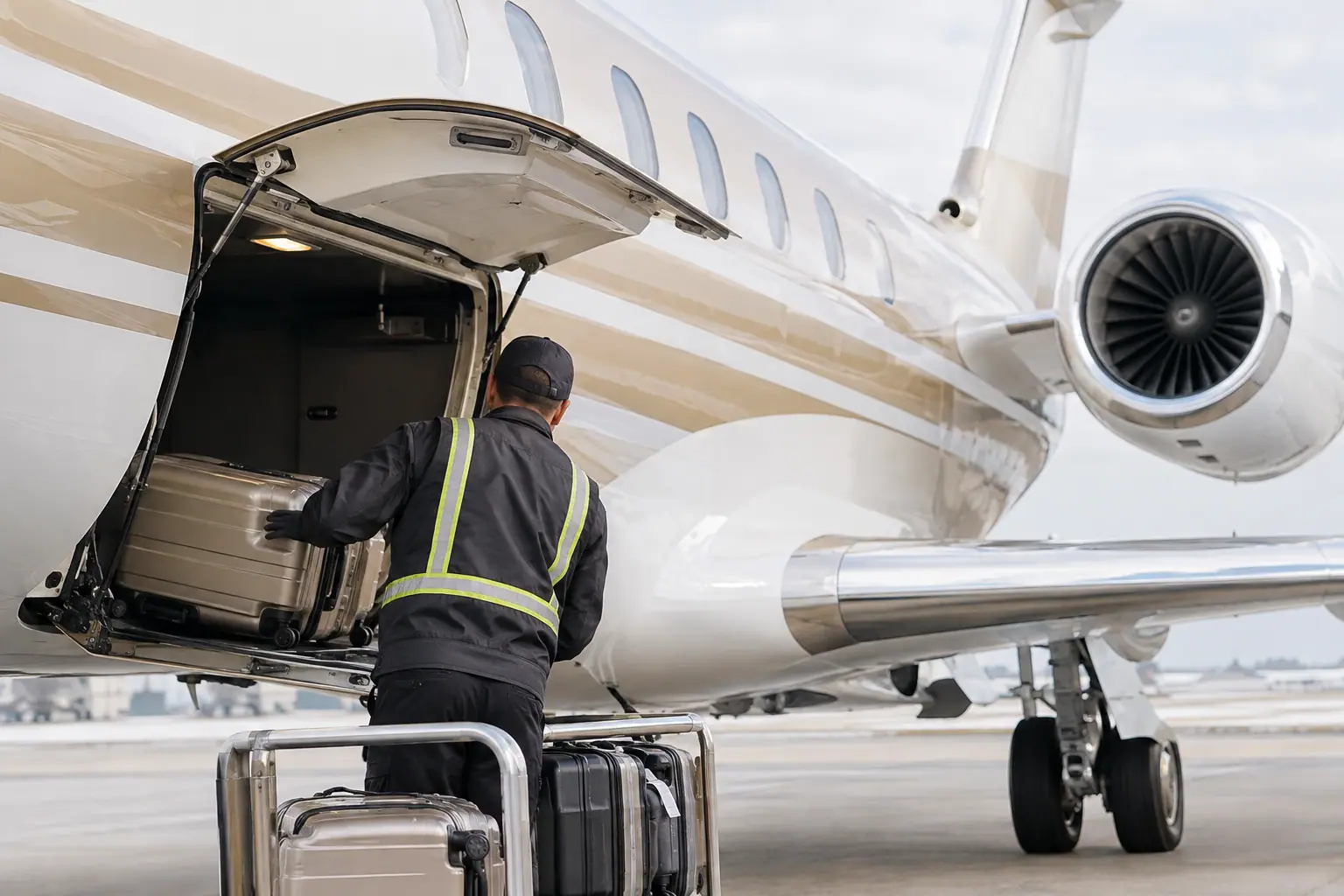
Give us your route, dates, passenger count, and luggage needs. We check which aircraft classes fit, including turboprops and light jets for short hops. We confirm whether your trip is domestic or international, since CBP applies on return from Mexico.
Compare quotes from operators
We request quotes from FAA Part 135 operators who hold operational control of the flight. Each quote reflects aircraft type, crew, and estimated flight time. We present the options with the numbers side by side, and note when a price is an estimate subject to change.
Confirm aircraft and FBO
You choose the aircraft and the Las Vegas airport, whether Harry Reid, Henderson Executive, or North Las Vegas. We coordinate with the operator and the FBO on arrival and departure times. If summer heat affects performance, then the operator may adjust payload or timing before you sign.
Fly and follow up
The operator manages the flight under its Part 135 certificate, and we act as your booking agent under DOT Part 295. You receive final trip documents before departure. After the flight, we stay available for changes or return-leg planning.
Common questions
How much does a private jet from Los Angeles to Las Vegas cost?
A light jet from Los Angeles to Las Vegas runs about $4,000 to $6,000 for the 199-nautical-mile flight, which takes roughly 47 minutes. That is an estimate and can change with aircraft availability, crew time, and date. Midsize jets cost more per hour, so the same route on a larger cabin may price higher even though the flight time is similar.
Which Las Vegas airport do private jets use?
Most use Harry Reid International, Henderson Executive, or North Las Vegas. Harry Reid is 2 miles from the Strip with a 14,835-foot runway. Henderson Executive is about 10 miles out at 2,492 feet elevation, and North Las Vegas is 7 miles out with a 5,005-foot runway. The choice often comes down to FBO access, aircraft size, and summer performance.
How does summer heat affect private jets Las Vegas departures?
July highs reach 104F, and density altitude at Harry Reid averages about 5,700 feet that month, peaking near 6,200 feet at 115F. High density altitude reduces performance, so a light jet may face a weight limit or need a longer runway. Operators sometimes move departures to cooler morning hours. If your trip is in peak summer, then ask for a performance check before booking.
Can I book a private jet from Las Vegas to Cabo San Lucas?
Yes. The route covers 826 nautical miles and takes about 2 hours 19 minutes in a light jet, with quotes around $9,000 to $13,500. It is an international flight, so CBP and Mexican customs formalities apply. Build extra time into your schedule for clearance, and confirm passport requirements with the operator before you book.
How far in advance should I book a private jet to Las Vegas?
Book several weeks ahead for event weekends and peak convention periods, and earlier if you need a specific aircraft class. During major citywide events, ramp space and crew availability tighten at all three airports. If your dates are fixed, then start the quote process early rather than waiting for a last-minute rate, which may not appear.
Who operates the private jets Las Vegas travelers book?
Flights are operated by FAA Part 135 operators who hold operational control of the aircraft and crew. We act as a charter broker under DOT Part 295 and arrange the trip on your behalf. We do not own or operate aircraft. If you have questions about a specific operator's certificate or safety record, then ask before you confirm.