Private Jet San Francisco to Las Vegas
A private jet from San Francisco to Las Vegas covers 359 nautical miles. The turboprop option takes 1 hour 33 minutes and costs $3,500 to $5,500. This guide explains airports, timing, and pricing.
- 359 nm413 statute miles
- 1h 33mturboprop airborne time
- $3,500–$5,500one-way estimate
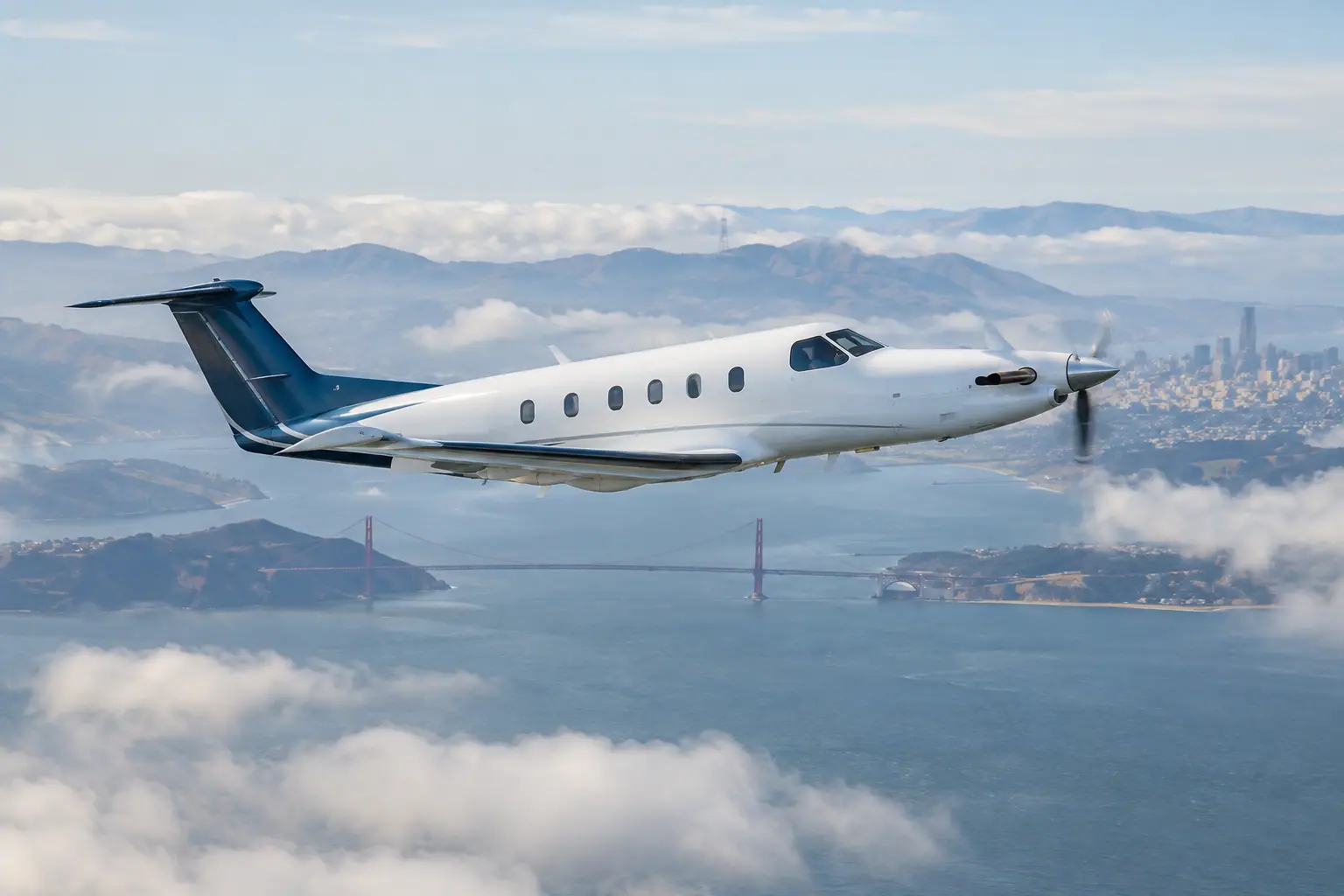
San Francisco to Las Vegas private jet prices by aircraft
Flying San Francisco to Las Vegas on a turboprop means 359 nautical miles and about 1h 33m; ballpark $3,500–$5,500 each way.The table below compares turboprop, light, midsize, super-midsize, and heavy jets on this 359-nautical-mile route. Times are nonstop; prices are estimates for the whole aircraft, not per seat. The turboprop is the most economical choice because the distance is short enough that speed differences matter less than hourly operating costs. All flights are arranged with FAA Part 135 operators.
| Aircraft class | Flight time | One-way estimate | Notes |
|---|---|---|---|
| Turboprop | 1h 33m | $3,500–$5,500 | Best fit |
| Light jet | 1h 11m | $4,500–$7,000 | Nonstop |
| Midsize jet | 1h 09m | $6,000–$9,000 | Nonstop |
| Super-midsize jet | 1h 06m | $8,000–$11,000 | Nonstop |
| Heavy jet | 1h 06m | $10,500–$16,000 | Nonstop |
Per-aircraft estimates, not per seat, before federal excise tax and segment fees. Times cover taxi, climb and descent.
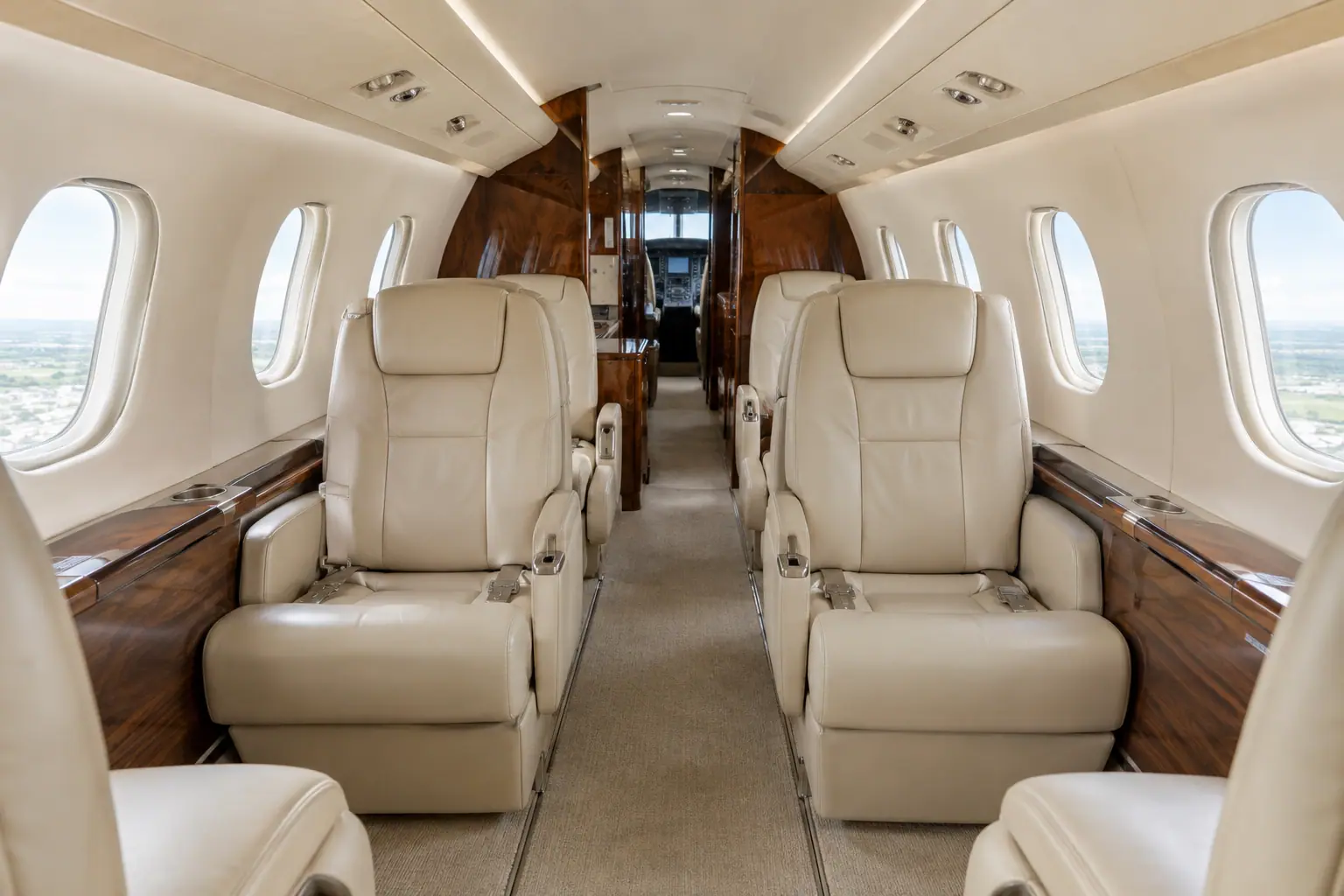
Why a turboprop fits this trip
The turboprop fits this 359-nautical-mile leg because its 1-hour-33-minute flight time is only 24 minutes longer than a light jet and 27 minutes longer than a heavy jet, yet it costs $3,500 to $5,500 versus $10,500 to $16,000 for a heavy. For a trip this short, the extra speed of a jet buys little door-to-door time once you factor in taxi and climb.
If you need more cabin space or baggage capacity, a light jet at $4,500 to $7,000 or a midsize at $6,000 to $9,000 is a reasonable step up. Super-midsize and heavy jets are available but rarely justified on this route unless you are continuing beyond Las Vegas or carrying a large group.
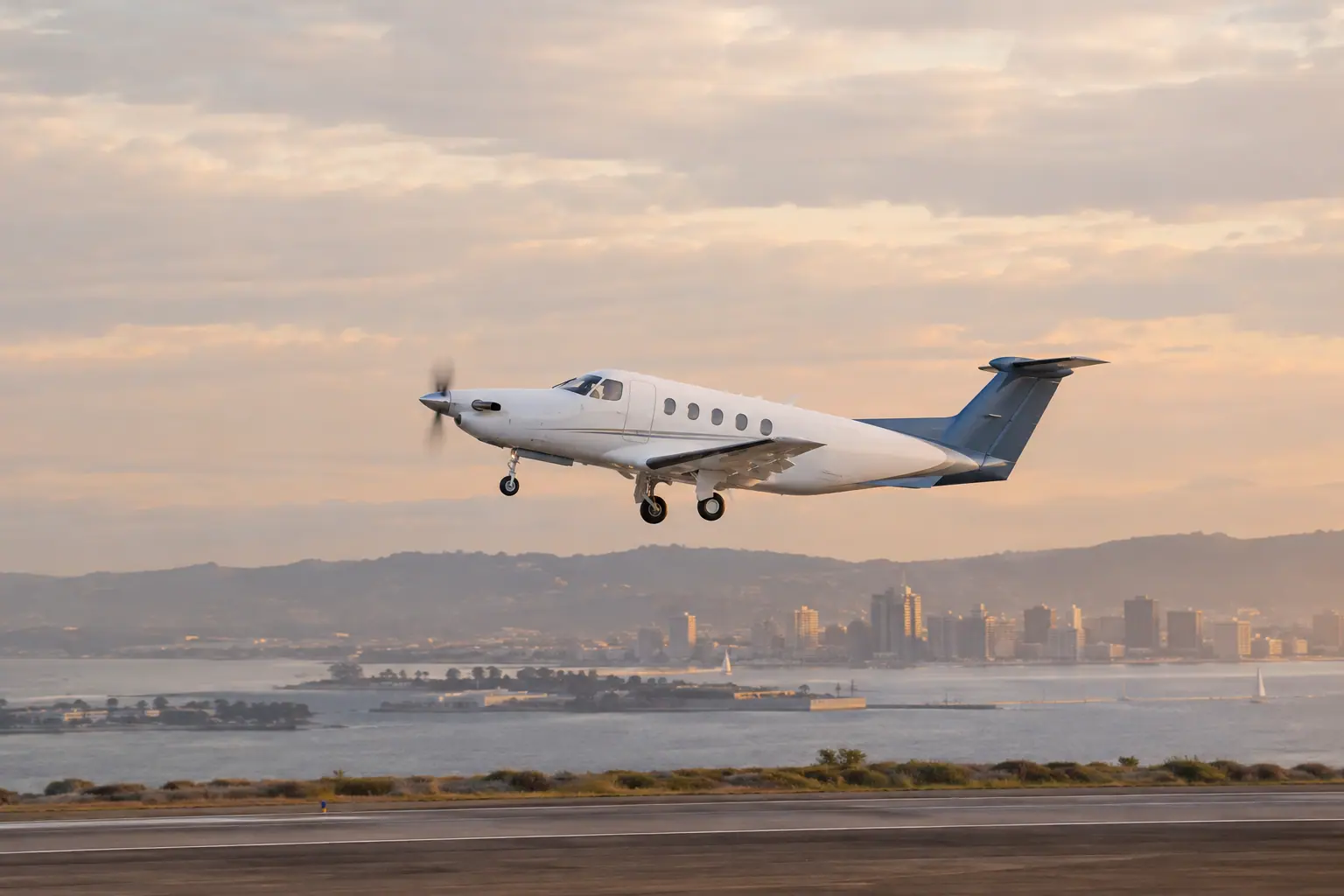
Pilatus PC-12 NGX
- 6 seats
- 290 kt cruise
- 1,800 nm range
Cabin 4 ft 10 in tall, 16 ft 11 in long. Baggage 40 cu ft.
Daher TBM 960
- 6 seats
- 330 kt cruise
- 1,730 nm range
Cabin 4 ft tall, 13 ft 3 in long. Baggage 32 cu ft.
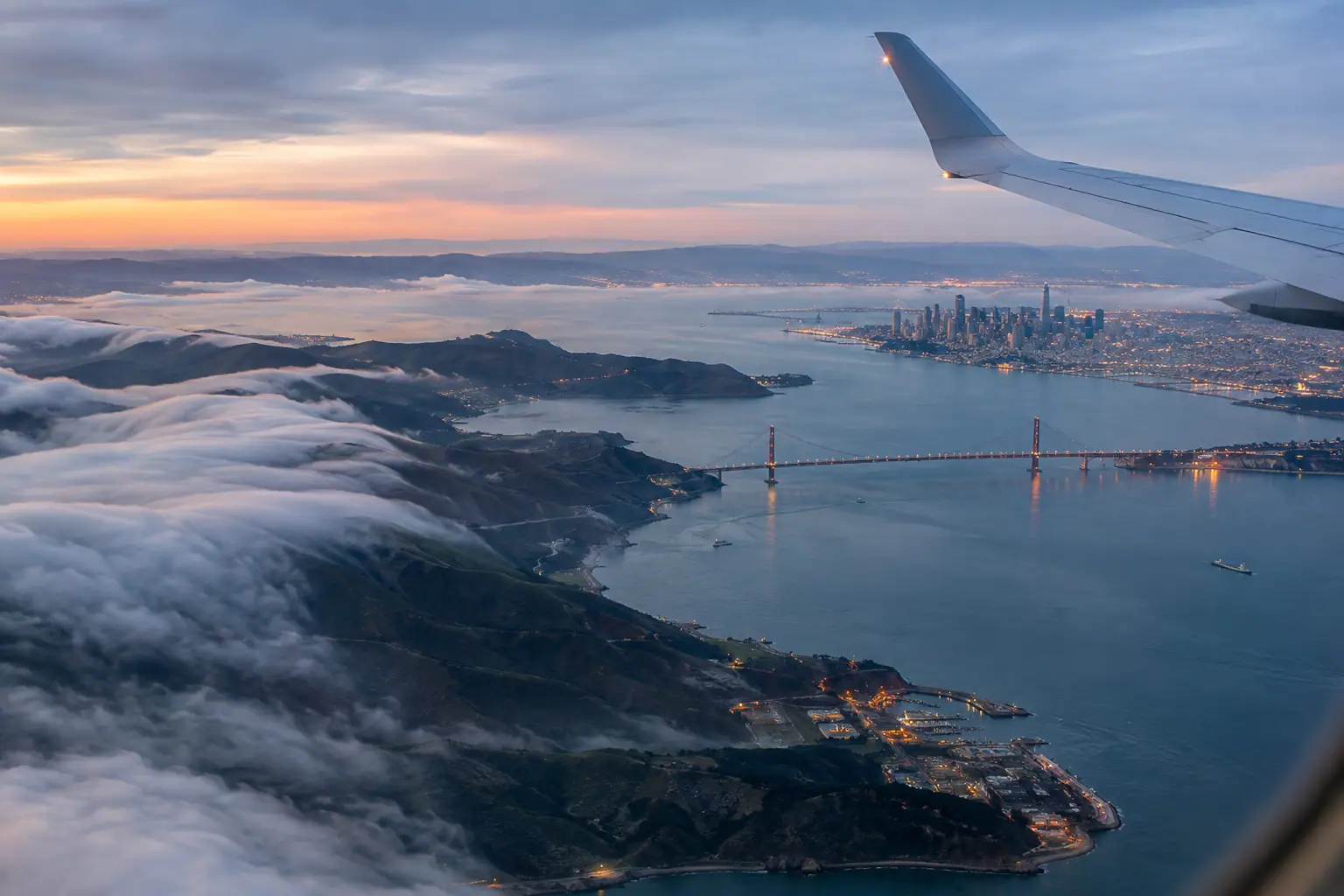
Departing from San Francisco
San Francisco International Airport (KSFO) and Oakland San Francisco Bay Airport (KOAK) serve as the primary departure points for this route. KSFO has a longest runway of 11,870 feet, while KOAK's longest is 10,520 feet, both adequate for the turboprops and jets that fly this leg. Most charter passengers use a private terminal or FBO, avoiding the main commercial terminals.
For a morning departure, plan to arrive at the FBO 15 to 20 minutes before your scheduled time. If you are flying from downtown San Francisco, allow extra time for bridge traffic. When your schedule is tight, then a turboprop from KOAK can be quicker to board than a jet from KSFO due to less congestion.
Arriving in Las Vegas
Las Vegas offers three general aviation airports: Harry Reid International (KLAS), Henderson Executive (KHND), and North Las Vegas (VGT). KLAS is closest to the Strip at 2 miles, but it is also the busiest. Henderson Executive is 10 miles from the Strip, and North Las Vegas is 7 miles away.
If your destination is the Strip or convention center, then KLAS or VGT will minimize your ground transfer. Henderson Executive is a quieter option with less traffic, often preferred for privacy. All three airports have runways long enough for the aircraft used on this route, with KLAS's 14,835-foot runway being the longest.
| Airport | Code | Runway |
|---|---|---|
| San Francisco International Airport | KSFO / SFO | 11,870 ft |
| Oakland San Francisco Bay Airport | KOAK / OAK | 10,520 ft |
| Harry Reid International Airport | KLAS / LAS | 14,835 ft |
| Henderson Executive Airport | KHND / HSH | 6,501 ft |
| North Las Vegas Airport | KVGT / VGT | 5,005 ft |
When to book a private jet San Francisco
Demand for private jet San Francisco to Las Vegas peaks during major conventions, fight weekends, and holiday periods. Rates can be 20–30% higher during these times, and aircraft availability is tighter. Book at least two weeks in advance for travel during peak events; for off-peak dates, a few days' notice is usually sufficient.
If you need a same-day round trip, then expect to pay for the aircraft to wait or to reposition. The total cost may be higher than two one-way trips. For return legs, consider a one-way charter back to San Francisco; empty-leg discounts are sometimes available but not guaranteed. Always confirm the operator's cancellation policy before booking.
Other private jet legs like San Francisco–Las Vegas
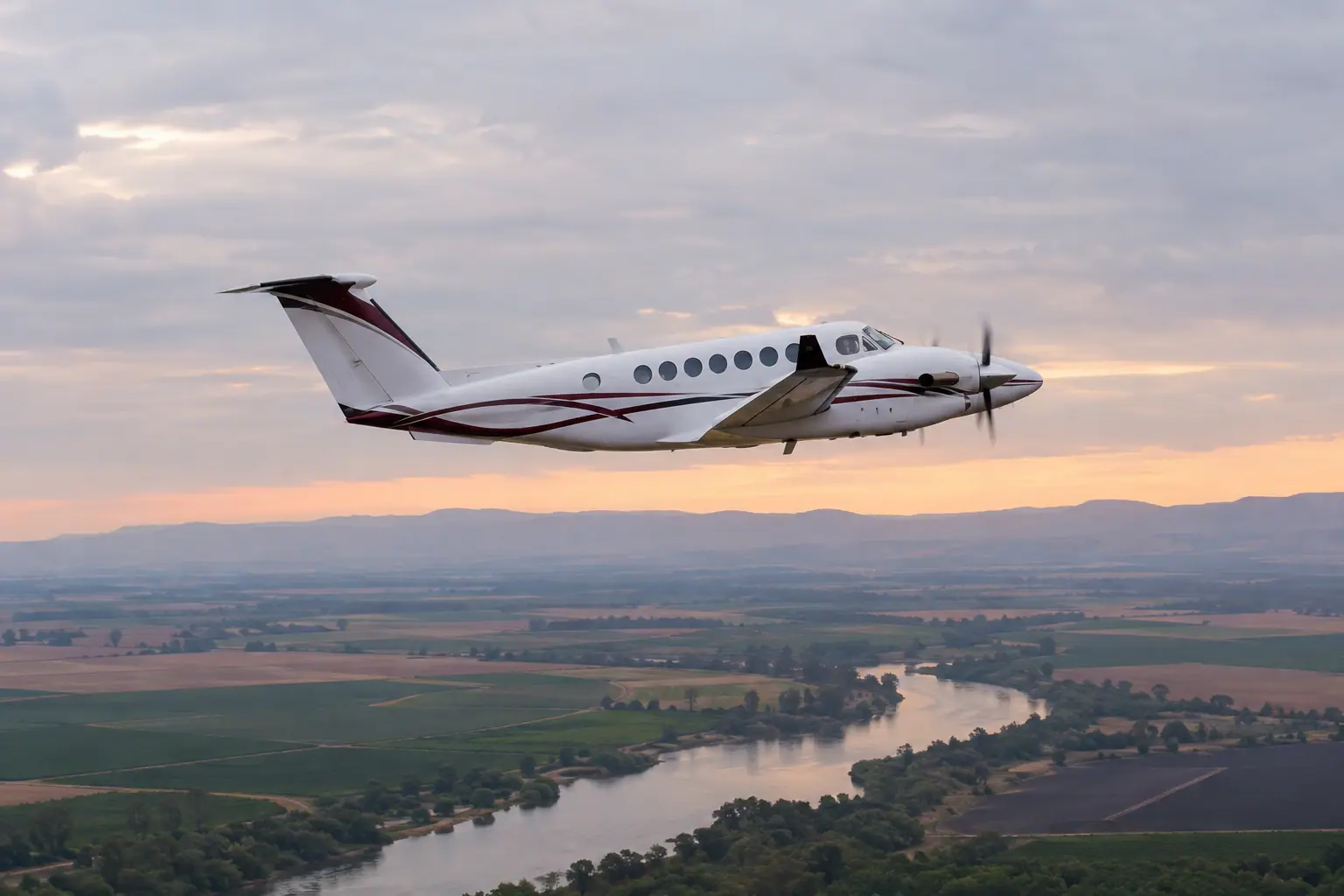
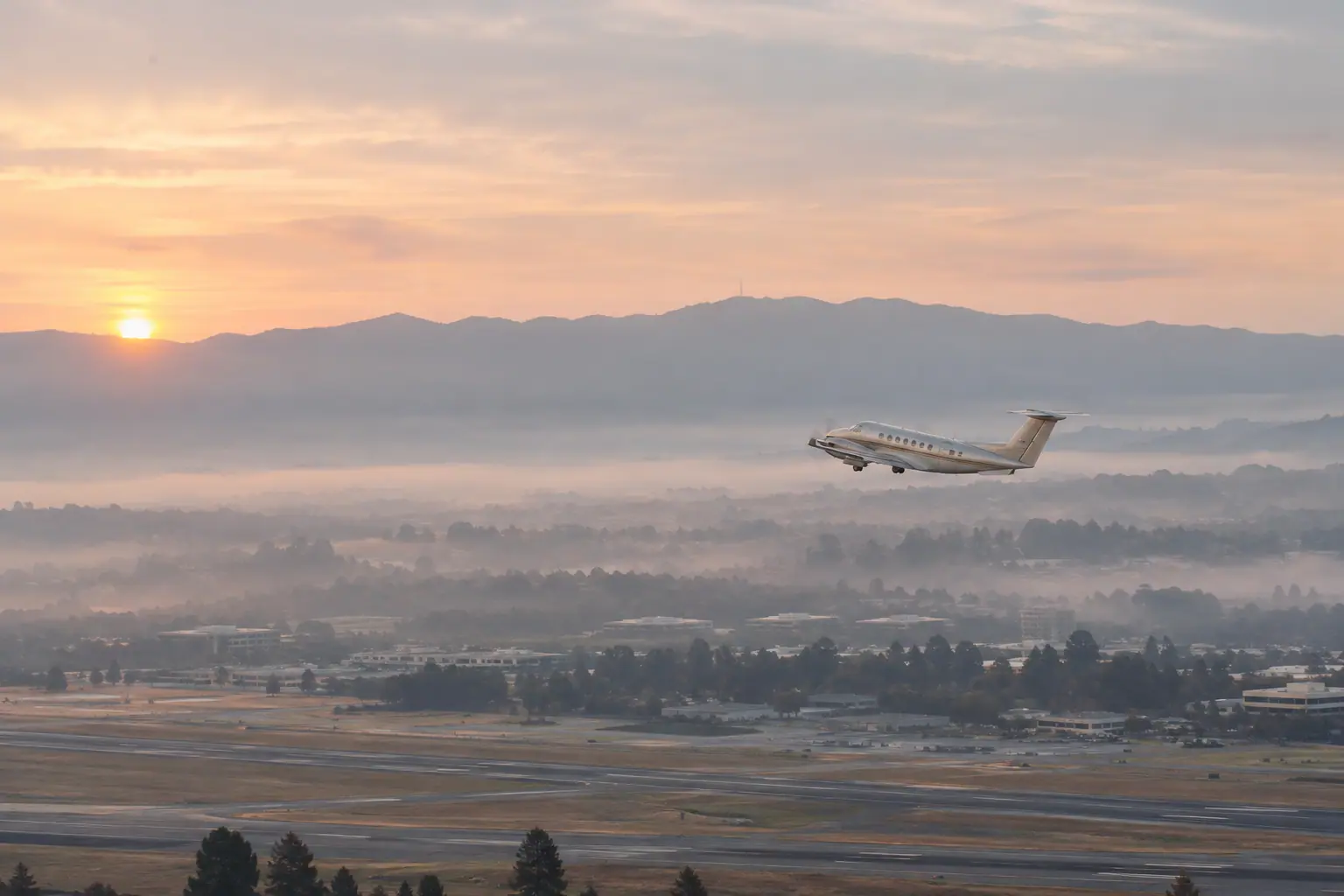
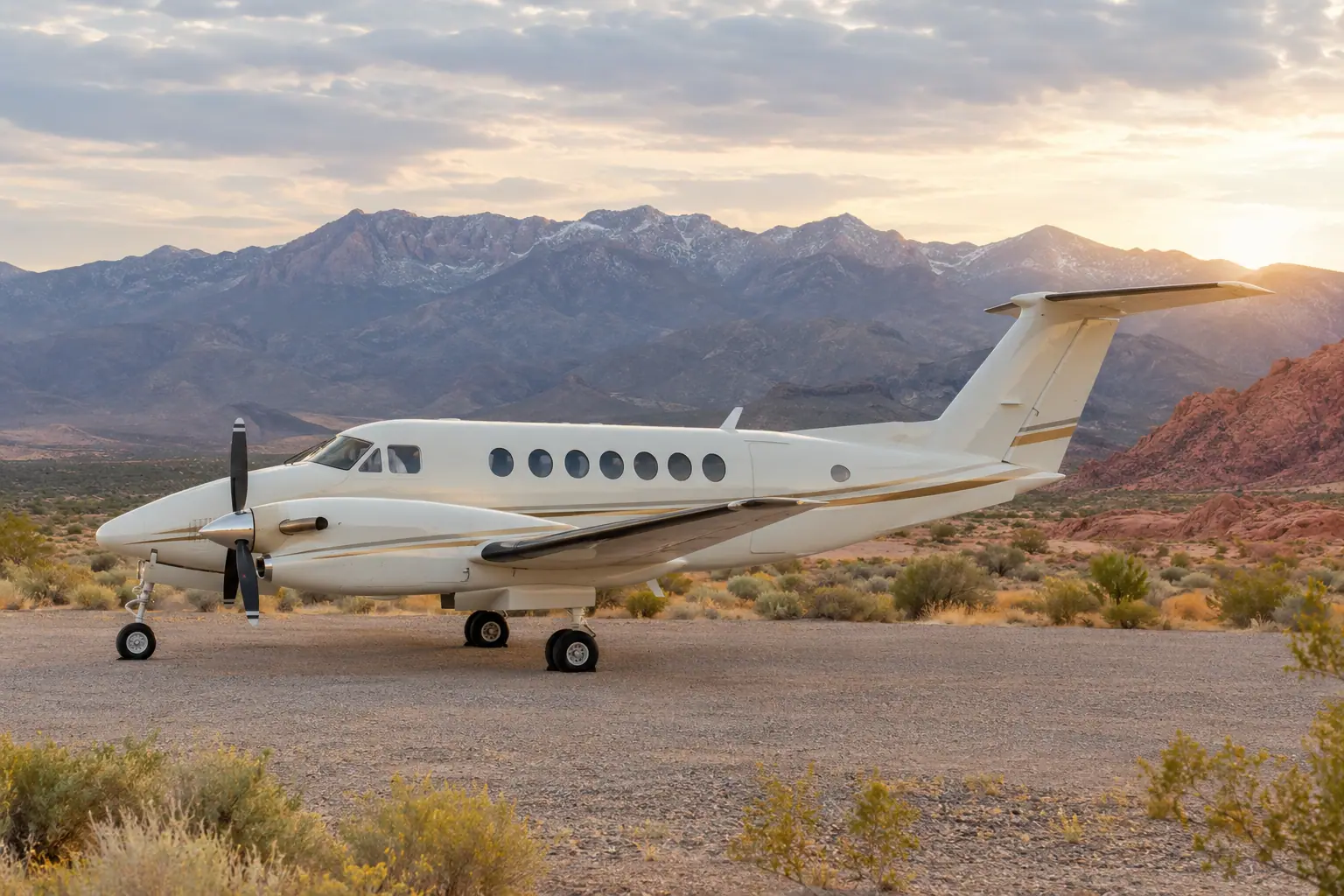
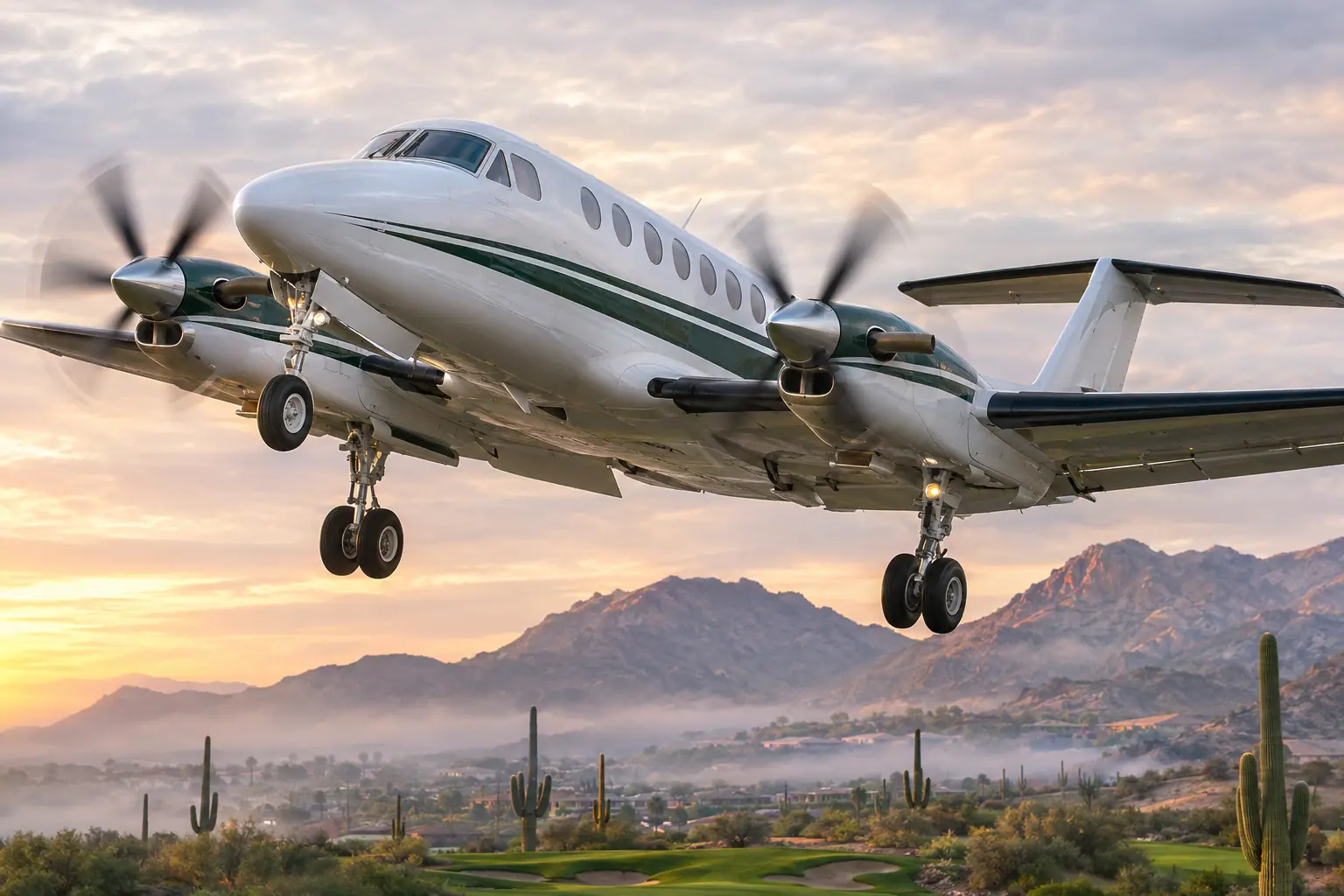
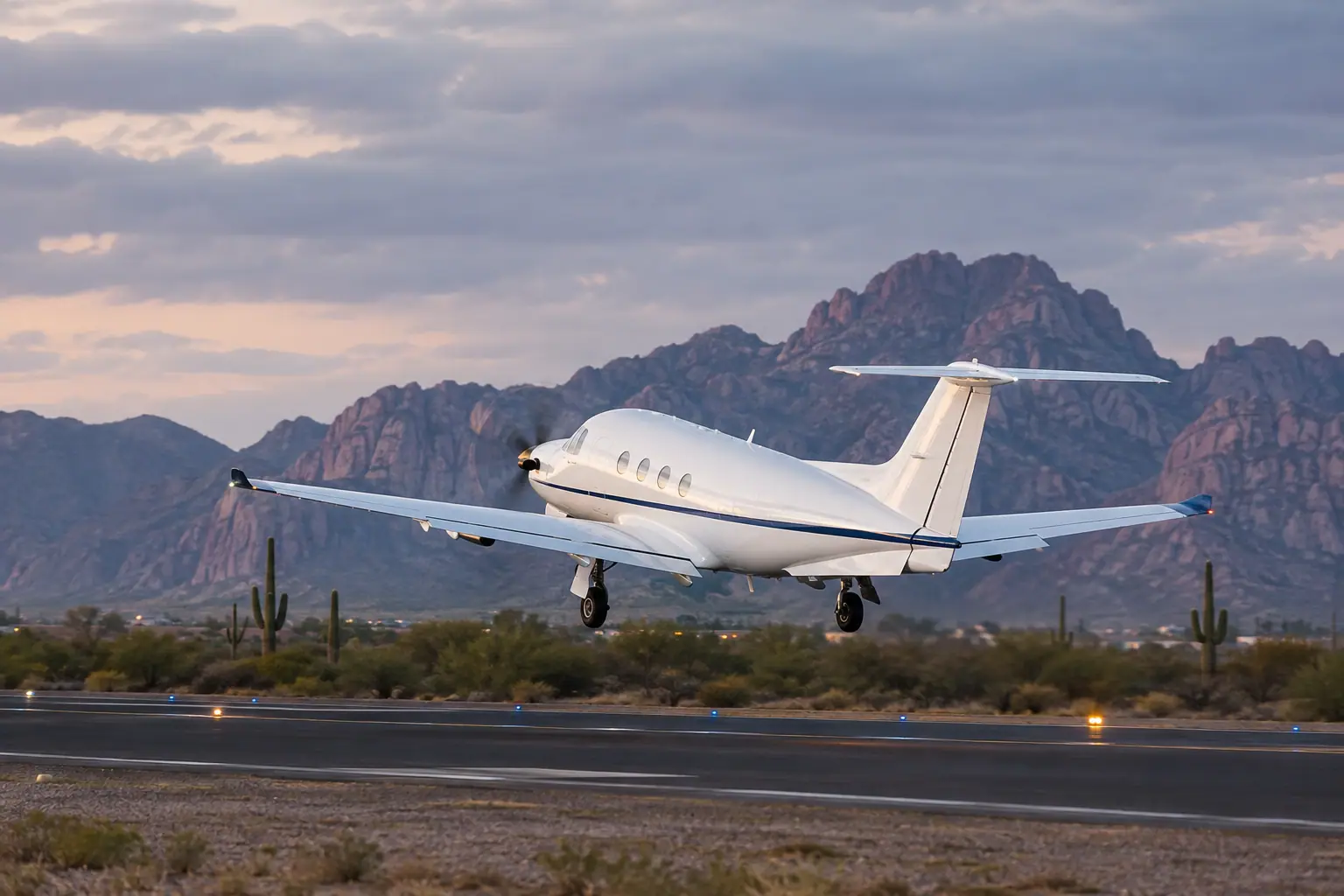
The 6 city pairs below span 206 to 345 nautical miles; single-leg turboprop ballparks run $2,000 to $5,500.
Route-specific inquiries
How much does a private jet San Francisco to Las Vegas cost?
Estimates range from $3,500 to $16,000 for the whole aircraft, depending on class. A turboprop starts at $3,500–$5,500; light jets $4,500–$7,000; midsize $6,000–$9,000; super-midsize $8,000–$11,000; heavy jets $10,500–$16,000. These are estimates and vary with availability, date, and operator.
How long is the flight from San Francisco to Las Vegas by private jet?
Nonstop flight times range from 1 hour 6 minutes in a heavy jet to 1 hour 33 minutes in a turboprop. The distance is 359 nautical miles (413 statute miles). Actual time depends on aircraft type, winds, and routing.
Which airport should I use in Las Vegas?
Harry Reid International (KLAS) is 2 miles from the Strip and has a 14,835-foot runway. Henderson Executive (KHND) is 10 miles from the Strip with a 6,501-foot runway. North Las Vegas (VGT) is 7 miles away with a 5,005-foot runway. Choose based on your destination and traffic.
Can I book a same-day round trip?
Yes, but it often requires the aircraft to wait or reposition, which increases cost. A one-way back may be cheaper if you have flexibility. Ask your broker about empty-leg options, which can reduce the return price but are not guaranteed.
What is the best aircraft for this route?
The turboprop is the most cost-effective, with flight times only 24–27 minutes longer than jets and prices from $3,500 to $5,500. Light and midsize jets offer more space at higher cost. Heavy jets are rarely needed for this short leg.
Are there any regulatory considerations?
All flights are operated by FAA Part 135 certificated operators who hold operational control. Charter brokers act as agents under DOT Part 295. For international legs, CBP is involved, but this domestic route does not require customs. TSA screening is not typical for private charter.