Private Jet Harry Reid
A private jet Harry Reid arrival puts you 2 miles from the Las Vegas Strip. The field's longest runway runs 14,835 ft, which matters when July density altitude climbs near 5,700 ft. This guide covers runways, FBOs, heat and alternate airports.
- KLAS · LASairport codes
- 2,181 ftfield elevation
- 14,835 ftlongest runway
- 2 mito the Strip
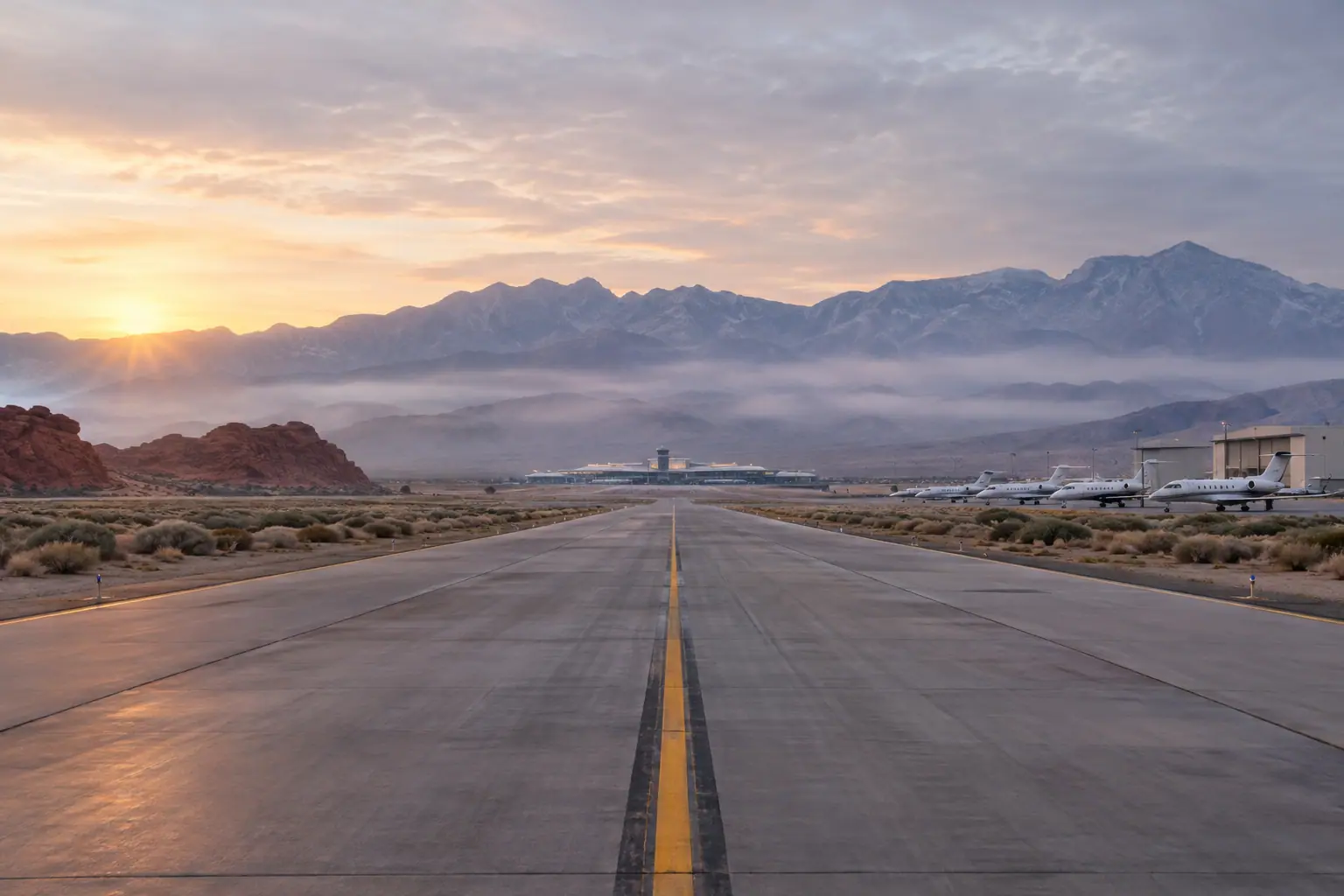
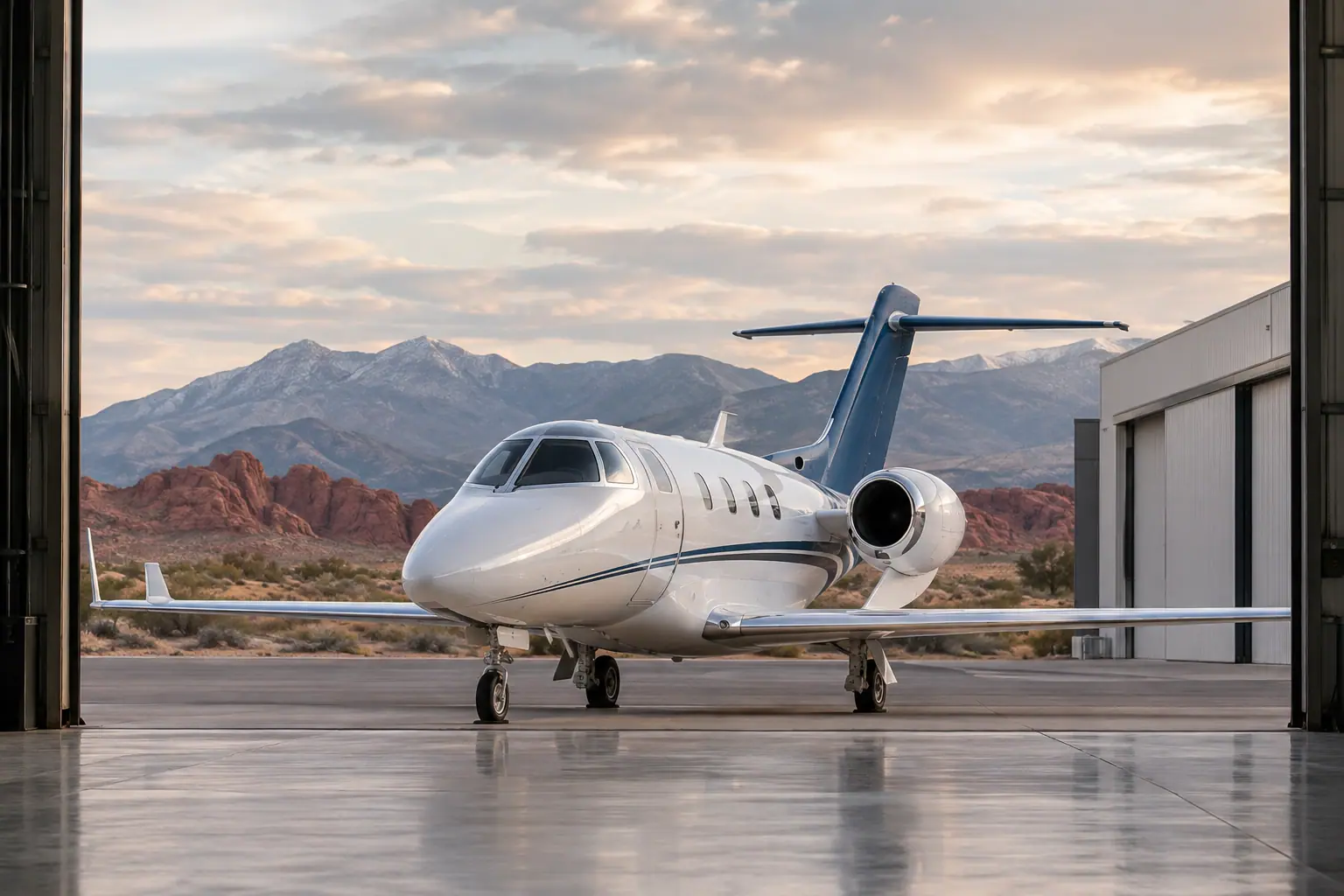
When you book a private jet Harry Reid arrival, LAS is the airport most Vegas travelers mean. The field sits 2 miles from the Strip, so the drive to a resort takes minutes rather than the longer haul from outlying fields. Harry Reid handles the bulk of the city's commercial traffic, and its general aviation side runs alongside it with the same FAA air traffic control services.
Charter flights here are arranged by brokers and flown by independent operators. The operator holds operational control and the FAA Part 135 certificate; the broker acts as your agent under DOT Part 295. That split matters when you compare quotes, because the aircraft, crew and safety record belong to the operator, not to whoever answers the phone. Ask for the operator's name before you commit.
The airport sits at 2,181 ft elevation in the Mojave basin. Summer afternoons push density altitude toward 5,700 ft at Harry Reid, which trims performance on light jets. Winter mornings run near 2,500 ft, so the same aircraft climbs faster and carries more. That seasonal swing is the single biggest planning variable for a private jet Harry Reid departure in July versus January.
Runways and field elevation at LAS
Runway 1L/19R stretches 14,835 ft at Harry Reid, the longest strip serving Las Vegas, at a field elevation of 2,181 ft. That length gives heavy jets and long-range types room to work even on hot afternoons. Parallel runways handle the commercial schedule, and general aviation arrivals slot into the flow under tower control. If your operator flies a midsize or larger jet, then the runway length rarely limits the payload you can carry out of LAS.
| Runway | Length | Span | Surface |
|---|---|---|---|
| 08L/26R | 14,835 ft | 150 ft | Asphalt |
| 08R/26L | 10,526 ft | 150 ft | Asphalt |
| 01L/19R | 9,770 ft | 150 ft | Concrete |
| 01R/19L | 9,769 ft | 150 ft | Asphalt |
FBOs serving general aviation
Two FBOs handle private jet Harry Reid traffic: Atlantic Aviation and Signature Aviation, both on the general aviation side. Each offers fueling, ground handling and a passenger lounge, and each coordinates ramp parking with the county's airport authority. If your trip involves international legs, then plan for CBP clearance and confirm the FBO can accommodate the arrival time before you book the aircraft.
Ground handling is where a broker earns their keep. Confirm which FBO your operator uses before you book, since ramp fees and handling charges vary between them. Ask whether the quote includes those fees or lists them separately, and ask who coordinates your ground transport from the ramp to the Strip. That one question separates a clean estimate from a surprise invoice.
Best for
- Strip arrivals where a 2-mile transfer matters more than ramp fees
- Long-range jets that need the 14,835 ft runway for hot-day departures
- International itineraries that require CBP clearance on arrival
- Travelers who want the widest choice of operators and aircraft types in the valley
| Type | Runway need | Here |
|---|---|---|
| Turboprop | 3,300 ft+ | Fits |
| Light jet | 4,000 ft+ | Fits |
| Midsize jet | 5,000 ft+ | Fits |
| Super-midsize jet | 5,200 ft+ | Fits |
| Heavy jet | 5,600 ft+ | Fits |
Heat and density altitude by season
July density altitude at Harry Reid averages about 5,700 ft on a 104F afternoon, and peaks near 6,200 ft at 115F. Thin air reduces lift and engine margin, so operators compute performance for the specific aircraft, runway and temperature before accepting a departure. If you are flying a light jet out of LAS in midsummer, then expect a payload or fuel tradeoff that a winter departure would not require.
The shoulder months ease that constraint. October highs near 80F put density altitude around 4,100 ft, and January mornings near 58F bring it down to roughly 2,600 ft. If your schedule is flexible and the aircraft is weight-limited, then a morning departure in any month beats an afternoon slot. Rain is rare year-round, with wet days topping out at 3 per month in the cool season.
| Month | Avg high | Wet days | Density altitude |
|---|---|---|---|
| Jan | 58°F | 3 | 2,600 ft |
| Feb | 63°F | 3 | 3,000 ft |
| Mar | 71°F | 3 | 3,500 ft |
| Apr | 78°F | 2 | 4,000 ft |
| May | 89°F | 1 | 4,700 ft |
| Jun | 99°F | 1 | 5,400 ft |
| Jul | 104°F | 2 | 5,700 ft |
| Aug | 102°F | 2 | 5,600 ft |
| Sep | 94°F | 2 | 5,000 ft |
| Oct | 80°F | 2 | 4,100 ft |
| Nov | 66°F | 2 | 3,200 ft |
| Dec | 56°F | 3 | 2,500 ft |
Getting to and from the airport
Harry Reid sits 2 miles from the Strip, a short drive via Paradise Road or the airport connector tunnels. Ride-share pickup and taxis stage at designated zones, and most FBOs can arrange a car to meet you on the ramp. If you are heading to downtown or Summerlin instead, then allow extra time, since those trips run longer than the Strip corridor. The Henderson and North Las Vegas fields sit 10 and 7 miles out respectively, which changes the ground equation for some travelers.
Private jet legs through Harry Reid
The 6 city pairs below span 197 to 359 nautical miles; single-leg light jet ballparks run $4,000 to $7,000.
Airport-specific inquiries
How far is a private jet Harry Reid arrival from the Strip?
The airport is 2 miles from the Strip, the shortest transfer of the three Las Vegas fields. Henderson Executive sits 10 miles out and North Las Vegas 7 miles. If your priority is a quick ride to a resort, then LAS wins on distance, though ramp fees and traffic can offset that advantage on busy weekends.
What is the longest runway at Harry Reid International Airport?
Runway 1L/19R measures 14,835 ft at a field elevation of 2,181 ft. That length supports heavy and long-range jets even on hot afternoons. Henderson Executive's longest runway is 6,501 ft and North Las Vegas tops out at 5,005 ft, so larger aircraft usually plan around LAS.
How does summer heat affect departures from LAS?
July density altitude averages about 5,700 ft, and it reaches 6,200 ft at 115F. Thin air cuts lift and engine margin, so operators run performance numbers for your specific aircraft and temperature. If you fly a light jet in midsummer, then expect a fuel or payload tradeoff, or shift to a morning departure when the air is cooler.
Which FBOs serve private jets at LAS?
Atlantic Aviation and Signature Aviation both handle general aviation traffic at Harry Reid. They provide fueling, ground handling and passenger lounges. Confirm which one your operator uses before you book, because handling fees differ and the quote should say whether those charges are included or billed separately.
Who is responsible for the flight when I charter?
The operator flying the aircraft holds operational control and the FAA Part 135 certificate. Your broker acts as an agent under DOT Part 295 and arranges the trip. Ask for the operator's name and certificate before you commit. On international legs, CBP handles clearance, and the FBO coordinates the arrival timing.
When should I use Henderson or North Las Vegas instead?
Henderson Executive is 10 miles from the Strip and North Las Vegas is 7 miles, with runways of 6,501 ft and 5,005 ft. If your aircraft is a light jet and your destination is Henderson or the east valley, then the shorter ground leg can outweigh LAS convenience. Larger jets generally still need Harry Reid's runway.