Private jet Las Vegas to Aspen
A private jet Las Vegas to Aspen covers 436 nautical miles, roughly 502 statute miles. The leg takes about 1 hour 22 minutes in a light jet and less in faster classes. This page covers aircraft choices, the Aspen arrival, and what drives the price.
- 436 nm502 statute miles
- 1h 50mturboprop airborne time
- $4,000–$6,500one-way estimate
Las Vegas to Aspen private jet prices by aircraft
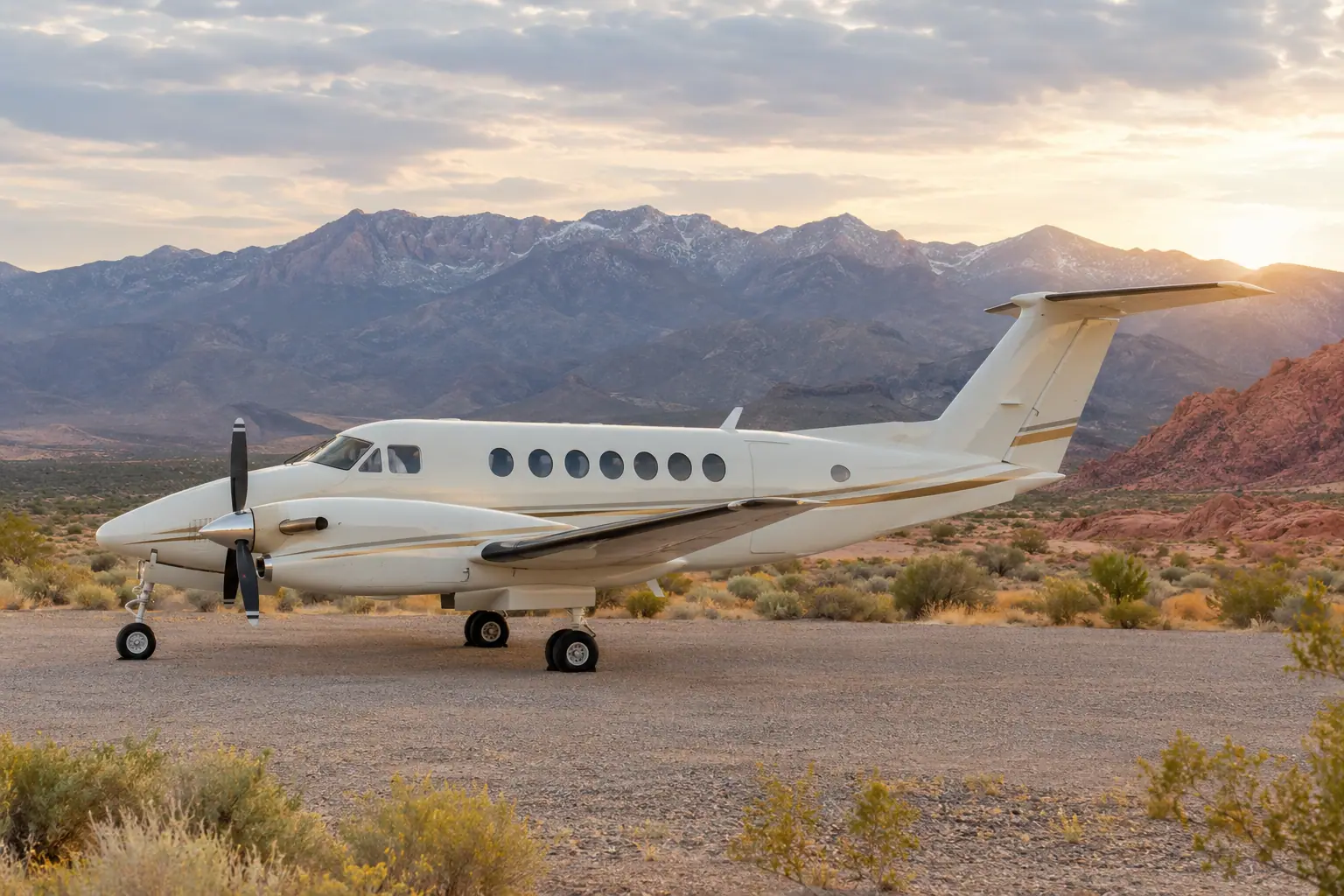
Flying Las Vegas to Aspen on a turboprop means 436 nautical miles and about 1h 50m; ballpark $4,000–$6,500 each way.Five classes of aircraft can fly this route nonstop, and every one of them beats the drive. The table below pairs each class with its flight time and an estimated price range for the one-way leg. Turboprops and light jets sit at the low end; super-midsize and heavy jets at the top. Treat every figure as an estimate, because quotes move with aircraft, date and crew.
| Aircraft class | Flight time | One-way estimate | Notes |
|---|---|---|---|
| Turboprop | 1h 50m | $4,000–$6,500 | Best fit |
| Light jet | 1h 22m | $5,000–$8,000 | Nonstop |
| Midsize jet | 1h 20m | $7,000–$10,500 | Nonstop |
| Super-midsize jet | 1h 16m | $9,000–$12,500 | Nonstop |
| Heavy jet | 1h 16m | $12,000–$18,500 | Nonstop |
Per-aircraft estimates, not per seat, before federal excise tax and segment fees. Times cover taxi, climb and descent.
Why a turboprop fits this trip
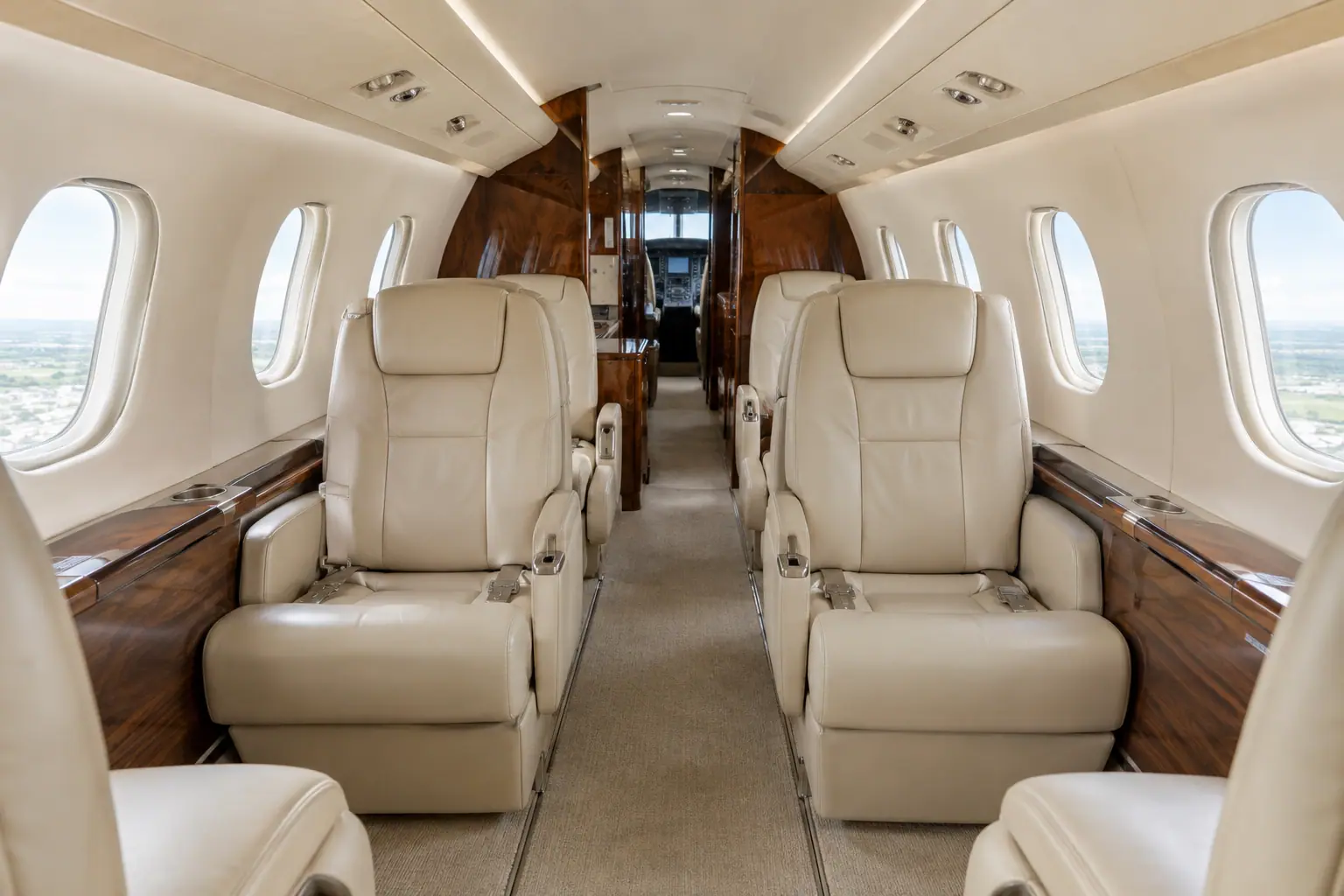
The turboprop fits this leg best. At 1 hour 50 minutes nonstop and an estimated $4,000 to $6,500 one-way, it costs less than any jet class on the same 436 nautical miles, and the Beechcraft King Air 350i seats 8 with 55 cubic feet of baggage. The Pilatus PC-12 NGX seats 6. If you want speed over price, the light jet cuts the trip to 1 hour 22 minutes for an estimated $5,000 to $8,000, and the midsize jet reaches Aspen in 1 hour 20 minutes at $7,000 to $10,500.
The super-midsize and heavy classes finish only a few minutes sooner, at 1 hour 16 minutes, and their estimated prices of $9,000 to $12,500 and $12,000 to $18,500 buy cabin comfort and luggage space more than time saved. On a leg this short, the honest question is how many people and bags you have, not how fast the aircraft cruises. Ask for a turboprop quote and a light jet quote side by side and compare door to door.
Pilatus PC-12 NGX
- 6 seats
- 290 kt cruise
- 1,800 nm range
Cabin 4 ft 10 in tall, 16 ft 11 in long. Baggage 40 cu ft.
Daher TBM 960
- 6 seats
- 330 kt cruise
- 1,730 nm range
Cabin 4 ft tall, 13 ft 3 in long. Baggage 32 cu ft.
Leaving Las Vegas
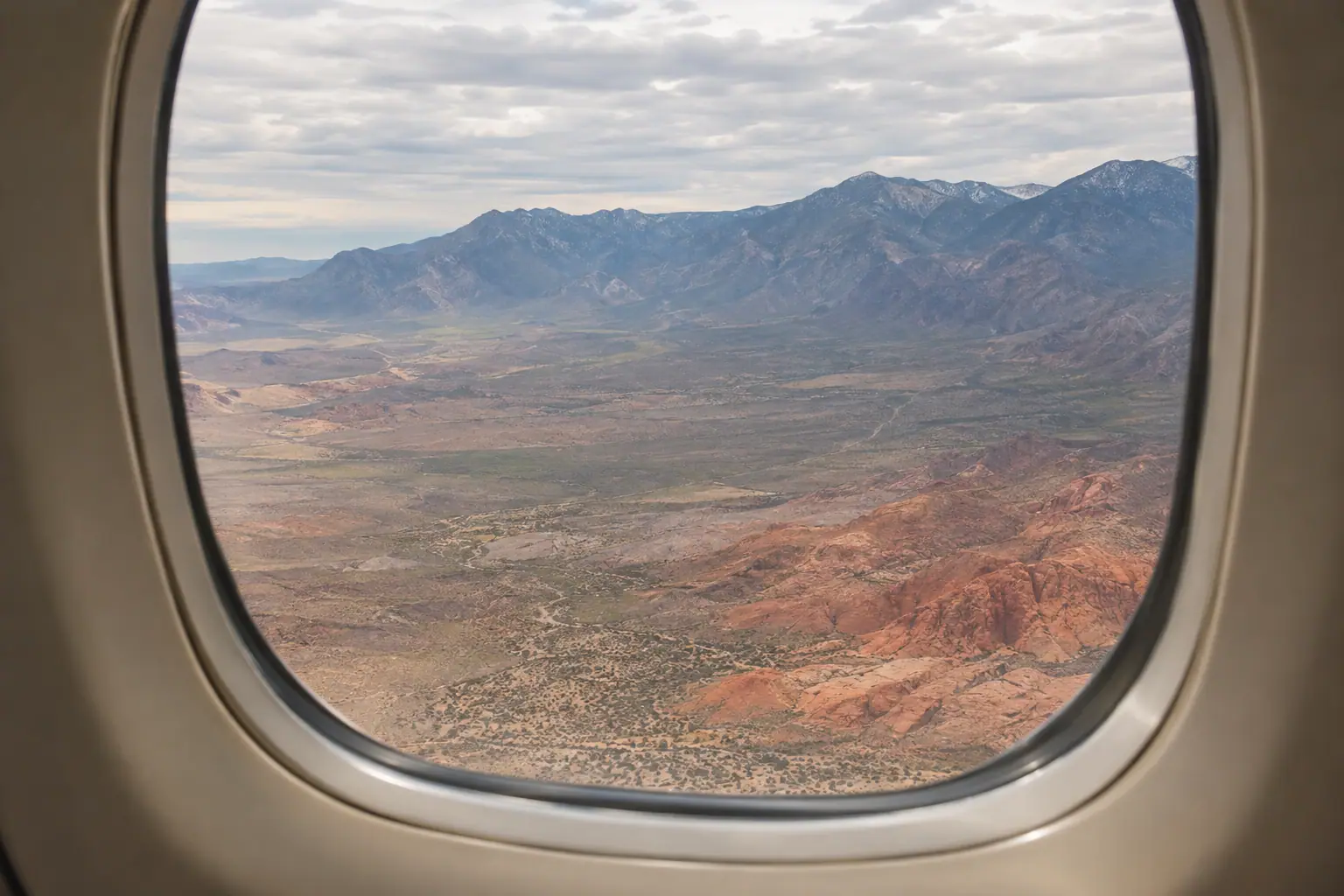
Harry Reid International Airport (KLAS) is 2 miles from the Strip and has a 14,835-foot runway, the longest of the three Las Vegas airports. Henderson Executive (KHND) sits 10 miles out with a 6,501-foot runway, and North Las Vegas (VGT) is 7 miles out with 5,005 feet. A private jet Las Vegas to Aspen usually departs from Henderson Executive or Harry Reid, depending on which operator you fly with and where its aircraft sits.
Give the operator your tail number time and your Aspen plans when you book, because the winter window at the far end is narrow. For a Las Vegas to Aspen flight, schedule the departure around the Aspen arrival slot rather than the other way around. Thermal delays in July are real but rarely cost more than a short wait.
Arriving at Aspen-Pitkin County
Aspen-Pitkin County Airport (KASE), also called Sardy Field, is the only airport on the Aspen end, and its single runway measures 8,006 feet. The field sits in the Roaring Fork Valley at mountain elevation, and that combination shapes everything about the arrival. The Aspen airport restricts arrivals to specific windows in winter, so your departure time is often set by the slot you are given.
Crews flying into Aspen need the right certification for the approach, and not every operator has it. If your operator cannot hold an Aspen slot, then the flight may route to Eagle or Rifle with a drive at the end, so confirm the airport before you pay. Ground transport from the Aspen airport to the downtown core is short, and the mountain is minutes beyond that.
| Airport | Code | Runway |
|---|---|---|
| Aspen-Pitkin County Airport (Sardy Field) | KASE / ASE | 8,006 ft |
| Harry Reid International Airport | KLAS / LAS | 14,835 ft |
| Henderson Executive Airport | KHND / HSH | 6,501 ft |
| North Las Vegas Airport | KVGT / VGT | 5,005 ft |
When prices peak
Demand peaks around the winter holidays and through ski season, when Aspen fills and aircraft that can take the approach are booked first. The private jet Las Vegas to Aspen run books out fastest for December and January dates, and the estimate you see in a slow week will not hold in a peak one. Summer brings its own traffic, including the Food and Wine Classic in June, and the valley is busy again.
Book at least two to three weeks ahead for peak-season dates and ask about the return leg at the same time. A same-day round trip on this route depends on finding an aircraft that stays in Aspen, and that is easier to arrange when you book both legs together. Empty legs back to Las Vegas do appear, but they are opportunistic and not something to plan around. If your dates are fixed, lock the aircraft early and treat the estimate as a starting point, not a final number.
Other private jet legs like Las Vegas–Aspen
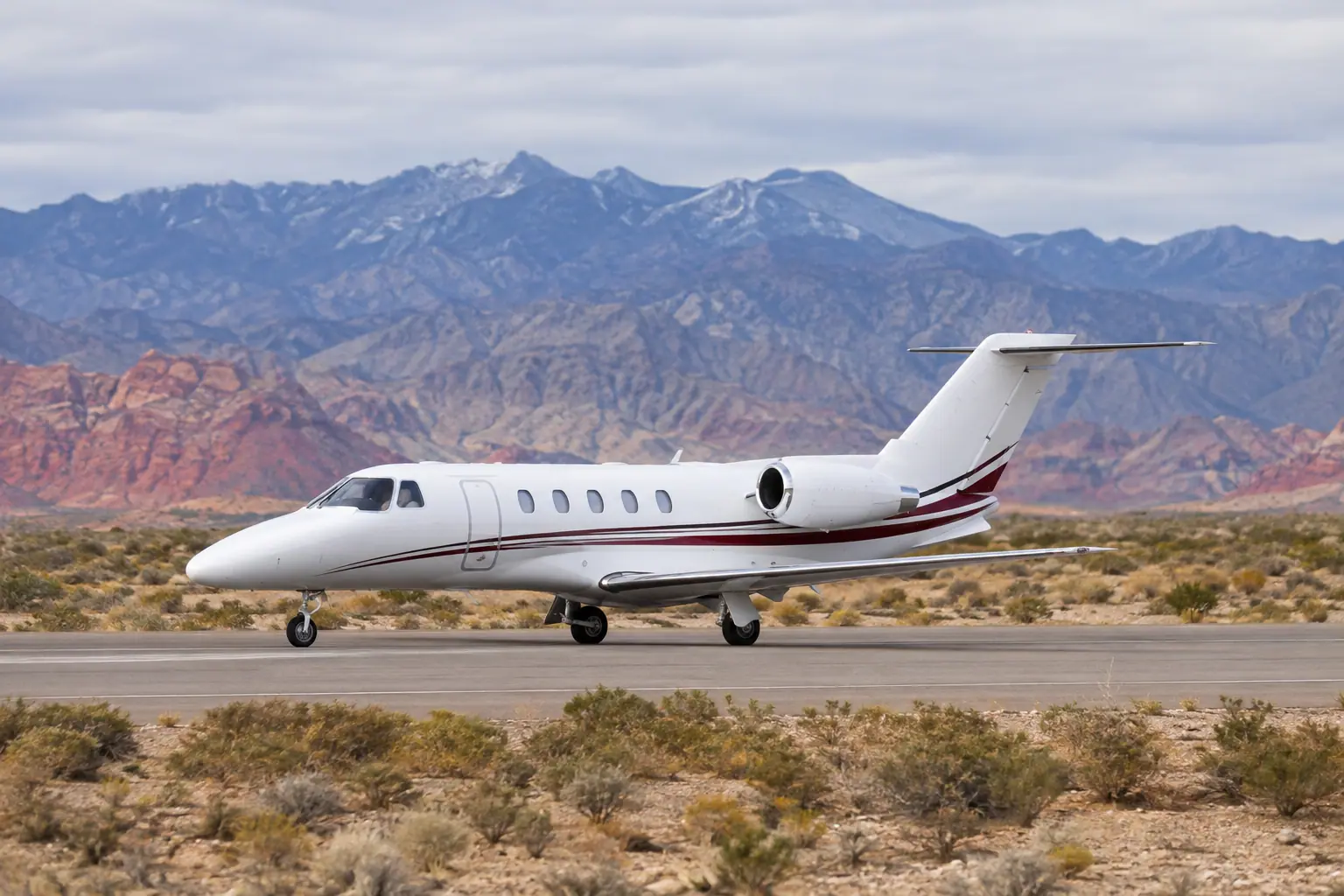
The 5 city pairs below span 197 to 1,935 nautical miles; single-leg turboprop ballparks run $2,000 to $27,500.
Route-specific inquiries
How long is a private jet Las Vegas to Aspen flight?
The flight runs 436 nautical miles, or about 502 statute miles, nonstop. A light jet takes 1 hour 22 minutes, a midsize jet 1 hour 20 minutes, and super-midsize and heavy jets 1 hour 16 minutes. A turboprop takes 1 hour 50 minutes. Times are airborne estimates and do not include taxi, so add a little for the full door-to-door count.
What does a private jet Las Vegas to Aspen cost?
Estimates start at $4,000 to $6,500 one-way for a turboprop and run $5,000 to $8,000 for a light jet. Midsize sits at $7,000 to $10,500, super-midsize at $9,000 to $12,500, and heavy jets at $12,000 to $18,500. These are estimates for the one-way leg and will move with date, aircraft availability and whether the aircraft has to reposition.
Which airport does the flight use in Aspen?
Aspen-Pitkin County Airport (KASE), also known as Sardy Field, is the only option on that end, with a single 8,006-foot runway. The airport sits in the Roaring Fork Valley and limits arrivals to certain windows in winter. Crews need specific certification for the approach, so confirm with your operator that the aircraft and crew are cleared for Aspen before you commit.
Can I fly Las Vegas to Aspen and back the same day?
It is possible if the aircraft stays in Aspen while you are on the ground, and the round trip is easier to arrange when both legs are booked together. The flight itself is short, but winter slot windows at Aspen constrain the schedule. Ask your broker to price the return leg at the same time so you know the whole cost before booking.
Who operates the aircraft on this route?
Charter flights are flown by FAA Part 135 operators who hold operational control of the aircraft and crew. We arrange the flight as your agent under DOT Part 295 rules, which means the operator, not us, is responsible for the flight. That structure is standard for charter brokers and worth understanding before you sign anything.
How far ahead should I book this flight?
For peak ski season and holiday dates, two to three weeks ahead is a sensible minimum, and earlier is better for aircraft that can take the Aspen approach. Off-season dates are easier and prices are more stable. If your travel dates are fixed, book as soon as you know them, because the estimate on a quiet week will not hold in a busy one.
What affects the price on a 436 nautical mile leg?
Aircraft class is the biggest factor, followed by date and time, how far the aircraft has to fly to reach Las Vegas, and whether it stays in Aspen for a return. Winter demand at Aspen narrows the supply of qualified aircraft, and that pushes estimates up. Fuel and crew costs vary by operator, so compare quotes on the same class and date.