Private Jet New York to Las Vegas
A private jet New York to Las Vegas covers 1,935 nautical miles. Super-midsize and heavy jets fly it nonstop in about 4h 37m. Nonstop charter estimates run $33,500 to $46,000 one way.
- 1,935 nm2,227 statute miles
- 4h 37msuper-midsize jet airborne time
- $33,500–$46,000one-way estimate
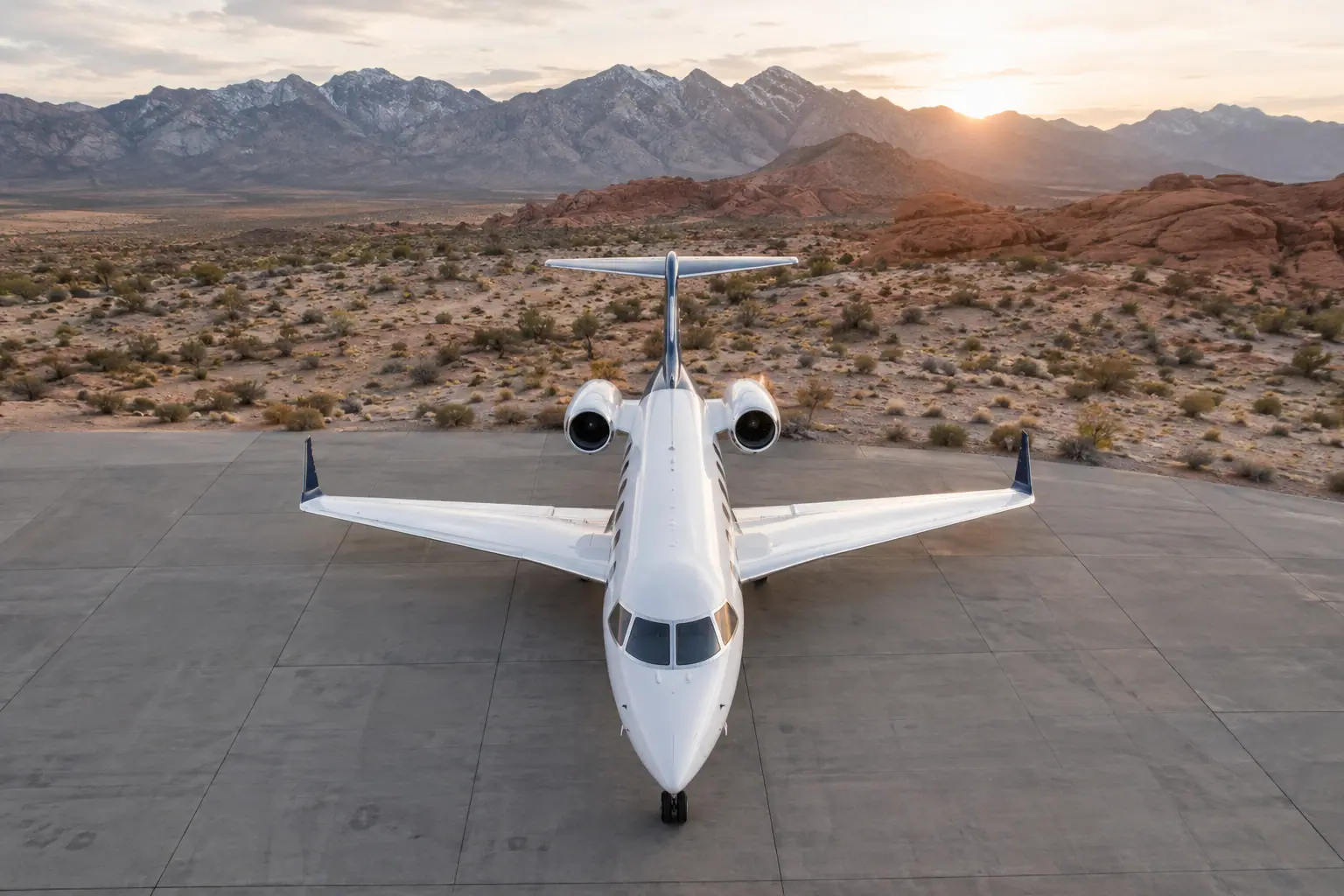
New York to Las Vegas private jet prices by aircraft
Flying New York to Las Vegas on a super-midsize jet means 1,935 nautical miles and about 4h 37m; ballpark $33,500–$46,000 each way.One-way estimates for 2026, priced per aircraft rather than per seat. The leg is 1,935 nautical miles, roughly 2,227 statute miles. Only the super-midsize and heavy classes make it nonstop, so shorter block time matters more than the sticker price alone. Turboprops and light jets need a fuel stop.
| Aircraft class | Flight time | One-way estimate | Notes |
|---|---|---|---|
| Turboprop | 7h 49m | $17,000–$27,500 | Fuel stop needed |
| Light jet | 5h 46m | $22,000–$33,500 | Fuel stop needed |
| Midsize jet | 5h 40m | $29,500–$44,000 | Fuel stop needed |
| Super-midsize jet | 4h 37m | $33,500–$46,000 | Best fit |
| Heavy jet | 4h 37m | $44,000–$67,000 | Nonstop |
Per-aircraft estimates, not per seat, before federal excise tax and segment fees. Times cover taxi, climb and descent.
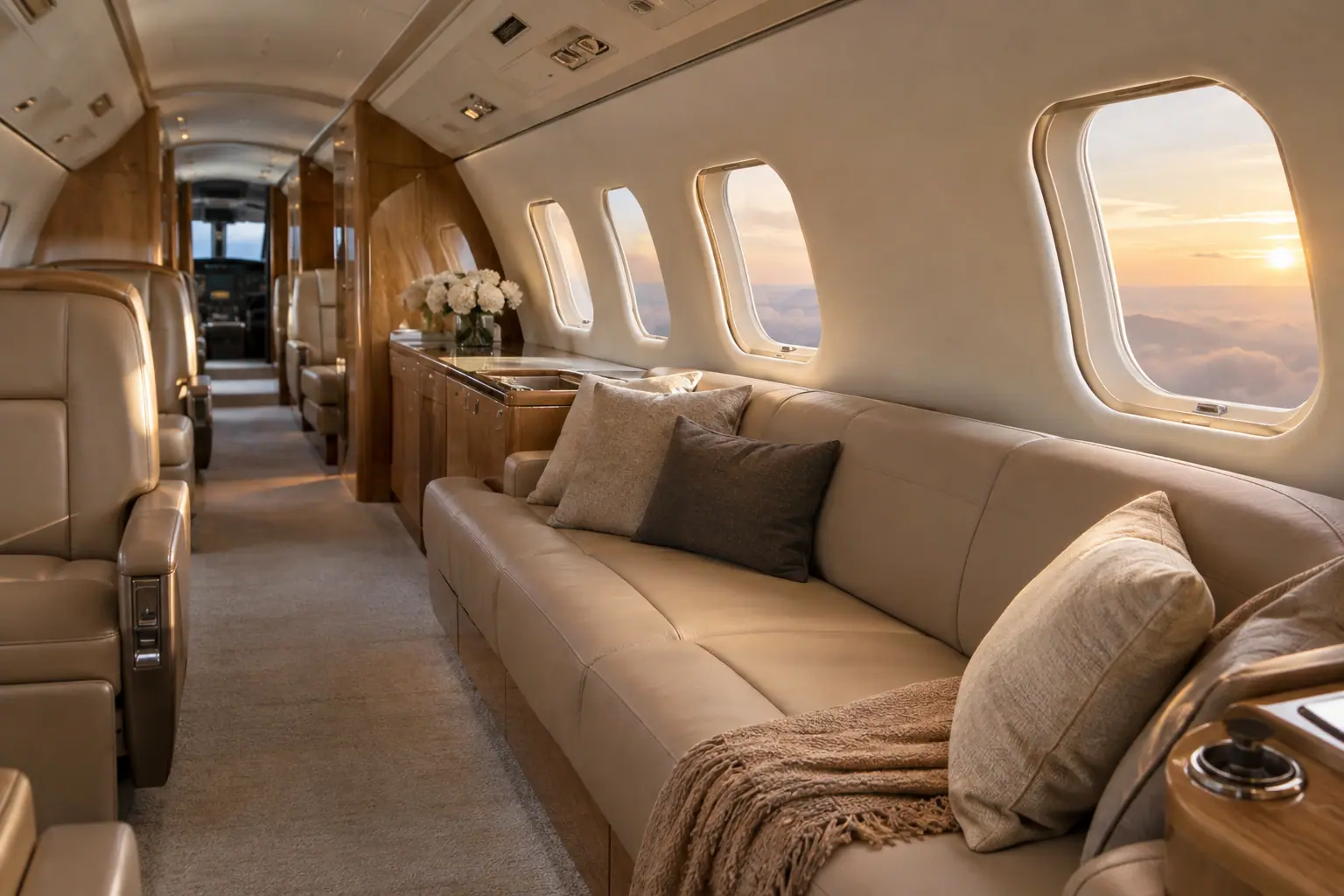
Why a super-midsize jet fits this trip
A super-midsize jet is the right class for this leg. It clears 1,935 nautical miles nonstop, where light and midsize jets must stop for fuel, and it lands in Las Vegas at 4h 37m for an estimated $33,500 to $46,000 one way. The Gulfstream G280 carries 9 passengers and 154 cubic feet of baggage with 3,600 nautical miles of range, so the return leg needs no stop either.
A heavy jet flies the same 4h 37m and adds cabin space, at $44,000 to $67,000 each way. Skip turboprops and light jets on this route unless price outweighs a fuel stop and a 5h 46m to 7h 49m trip. Midsize jets land between the two on price and still need to stop.
Cessna Citation X+
- 9 seats
- 527 kt cruise
- 3,460 nm range
Cabin 5 ft 8 in tall, 25 ft 2 in long. Baggage 82 cu ft.
Bombardier Challenger 350
- 10 seats
- 470 kt cruise
- 3,200 nm range
Cabin 6 ft tall, 25 ft 2 in long. Baggage 106 cu ft.
Leaving New York
Departures typically use Teterboro Airport in New Jersey, with its 6,997-foot runway, or Westchester County Airport in White Plains at 6,549 feet. Both sit outside Manhattan traffic. Your operator files the plan and assigns the FBO.
Allow extra time on weekday afternoons. The airports are busy and slots may apply, so a departure request made weeks ahead moves more smoothly than one made the day before.
Landing in Las Vegas
Most flights land at Harry Reid International, 2 miles from the Strip, on a 14,835-foot runway. Henderson Executive, 10 miles out, and North Las Vegas, 7 miles out, handle plenty of general aviation traffic with shorter runways of 6,501 and 5,005 feet.
Harry Reid International puts the Strip 2 miles from the ramp, so most passengers step off and are at the hotel in minutes. Ask which airport your quote assumes, since the answer changes drive time and sometimes the hourly rate. The route stays domestic, so no passport or customs step applies on arrival.
| Airport | Code | Runway |
|---|---|---|
| Teterboro Airport | KTEB / TEB | 6,997 ft |
| Westchester County Airport | KHPN / HPN | 6,549 ft |
| Harry Reid International Airport | KLAS / LAS | 14,835 ft |
| Henderson Executive Airport | KHND / HSH | 6,501 ft |
| North Las Vegas Airport | KVGT / VGT | 5,005 ft |
Private jet New York to Las Vegas demand
If you travel during CES and major convention weeks, then expect the highest quotes and the tightest aircraft availability on this route. Las Vegas fills its hotels for large events, and charter brokers see the same squeeze on super-midsize and heavy jets. Book those trips weeks out rather than days.
If your trip is a same-day round trip, then the crew duty day and the return fuel stop both shape the quote. The outbound is 4h 37m nonstop in a super-midsize jet, and the return counts against the crew's legal day. Ask how your broker handles the return leg before you compare totals. If your plans are firm, then booking two to four weeks ahead usually costs less than a last-minute request. The FAA Part 135 operator behind the flight sets its own cancellation and repositioning terms, and those terms matter as much as the headline price.
Other private jet legs like New York–Las Vegas
The 6 city pairs below span 925 to 1,884 nautical miles; single-leg super-midsize jet ballparks run $17,000 to $45,000.
Route-specific inquiries
How long is a private jet New York to Las Vegas flight?
About 4h 37m nonstop in a super-midsize or heavy jet, over 1,935 nautical miles. Light jets take 5h 46m and turboprops 7h 49m because both need a fuel stop. Times are estimates and move with winds and routing, so treat them as planning figures rather than a schedule.
What does a private jet New York to Las Vegas cost?
Estimates start at $33,500 to $46,000 one way for a nonstop super-midsize jet, and $44,000 to $67,000 for a heavy jet. Light jets run $22,000 to $33,500 with a fuel stop. Prices are estimates for 2026 and exclude taxes, fees, crew overnight costs and de-icing.
Can I fly New York to Las Vegas nonstop?
Yes, in a super-midsize or heavy jet. Both cover the 1,935 nautical miles without a stop, so a Gulfstream G280 with 3,600 nautical miles of range makes the trip and returns without refueling. Light jets and turboprops must stop, so they add time and often land at a smaller airport.
Which Las Vegas airport will my flight use?
Harry Reid International is the common choice for its 2-mile distance to the Strip and 14,835-foot runway. Henderson Executive and North Las Vegas are alternates 10 and 7 miles out. Your broker confirms the airport before quoting, because the choice affects ground time and sometimes the charter price.
Is a same-day round trip possible?
It is possible but tight. Two nonstop legs of about 4h 37m each push against crew duty limits, and the operator may require a second crew or a night on the ground. Ask early so the quote reflects the real plan. Under DOT Part 295 rules, your broker acts as your agent, not the operator.
Who operates the aircraft I charter?
The flight is flown by a charter operator holding FAA Part 135 authority, which carries operational control and safety responsibility. Your broker arranges the flight under DOT Part 295 as an agent. Ask for the operator's name and certificate before you book, and confirm insurance and crew experience for this long leg.